
A collector can remember the day a car left the factory, the name of its first owner and the correct finish on a bracket nobody has seen since 1967. Ask when the tires were made and the historical record sometimes becomes rather less impressive.
“They’ve hardly done any miles” sounds reassuring. It also describes the spare wheel that has spent a decade listening to the trunk lid close.
Start with the date, not the shine
For a lightly used classic, tire age deserves attention alongside tread. The U.S. Tire Manufacturers Association specifically flags classic cars and other low-mileage vehicles: tread wear alone will not tell their owners when replacement is due.
Find the Tire Identification Number, beginning with DOT, on the sidewall. For tires made from 2000 onward, its final four digits identify the manufacturing week and year. A hypothetical 1821 means week 18 of 2021. Write down the dates for all four tires and the spare, rather than assuming the set shares a birthday.
That little inventory belongs beside the service records. The folder already contains enough receipts to explain why the holiday budget has become theoretical; one more useful page will not hurt.
There is no universal permission slip
NHTSA says some tire and vehicle manufacturers recommend replacement at six to ten years, regardless of tread. That range is not permission to keep every tire for ten years. Consult the guidance for your actual tires and vehicle, and ask a qualified tire professional about their condition and suitability.
Continental, for example, recommends removing tires more than ten years old from service, including spares. Its guidance also stresses that operating conditions make universal predictions about tire life impossible. A calendar limit is a ceiling, not a promise that damage cannot demand action sooner.
This matters particularly when buying a car. Fresh paint photographs beautifully. The date molded into the rubber rarely makes the auction glamour shots. Ask for it before arranging the drive home.
Give the rubber a proper appointment
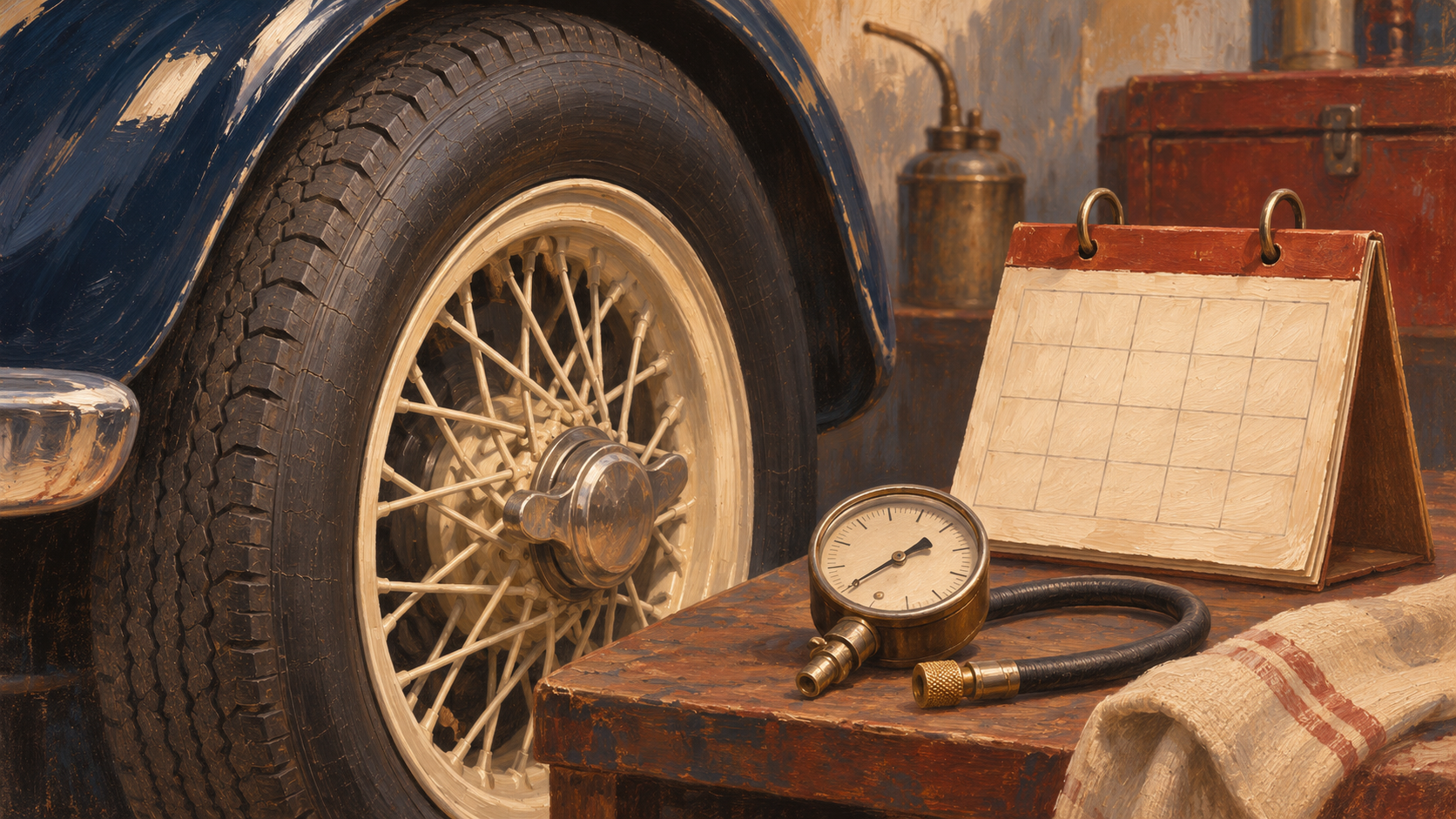
NHTSA recommends checking pressure monthly when tires are cold and using the vehicle manufacturer’s recommended pressure, rather than the maximum printed on the tire. If your classic has nonstandard wheels or a changed tire specification, have a knowledgeable specialist establish the appropriate fitment and inflation guidance instead of guessing.
Look for damage and abnormal wear, and investigate air loss or a change in vibration promptly. USTMA recommends regular professional inspections alongside owners’ monthly checks. A clean sidewall and plenty of tread cannot certify the condition of everything inside.
Before the next outing, make three notes: manufacturing dates, the relevant replacement guidance, and the last professional inspection. If something is questionable, resolve it before the scenic route. Do not turn a Sunday drive into an experiment.
Originality is a wonderful subject for the show field. On the road, the tires still have a job to do. Let the car preserve its history without asking old rubber to preserve yours.
Sources
Related reading: Classic Car Storage: Give the Garage a Plan