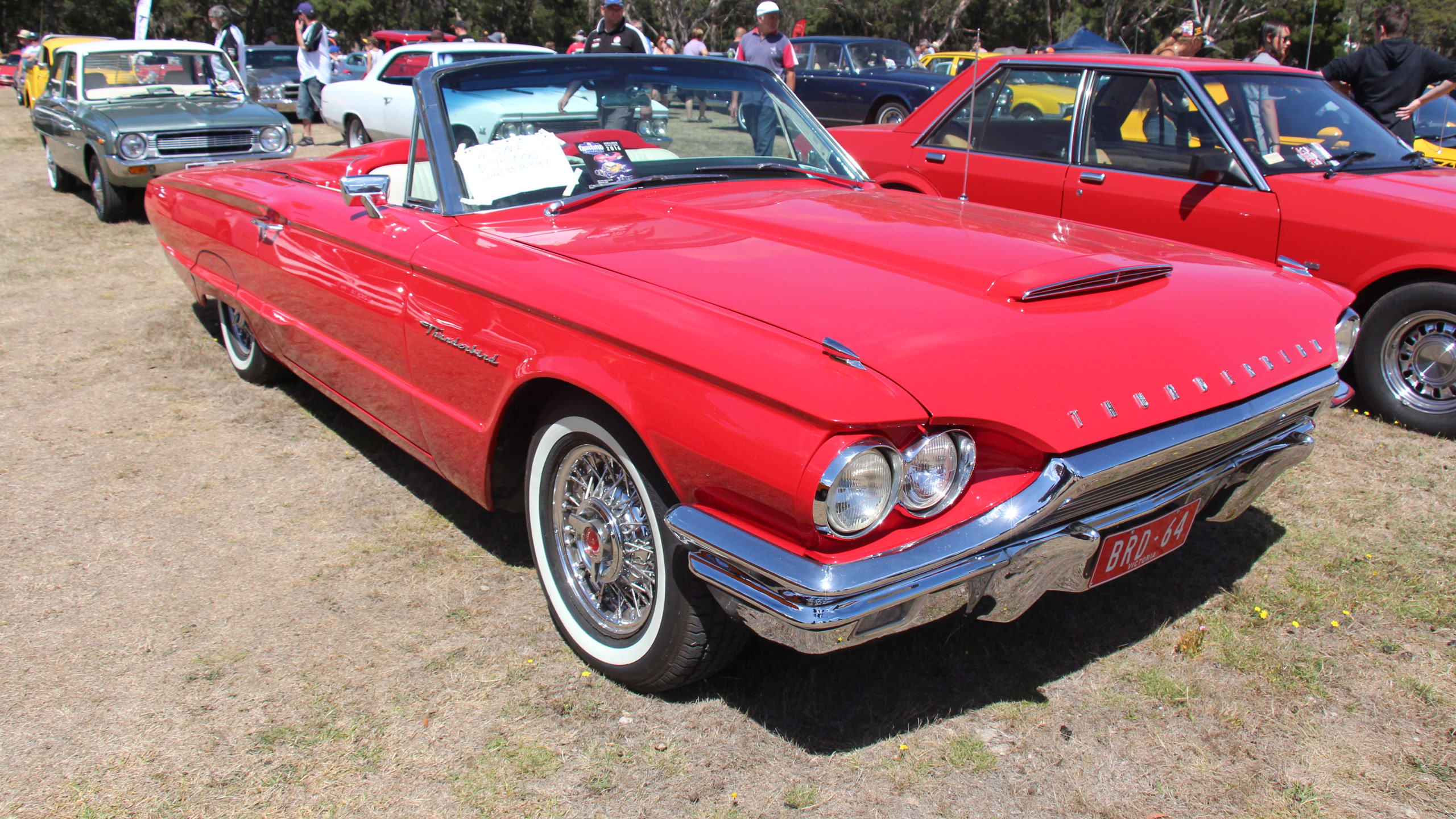

Some cars arrive. A 1964 Thunderbird convertible makes an entrance, then waits for the valet to get his priorities straight. The hood stretches away like a hotel corridor, the brightwork has actual presence, and the open cabin suggests that driving somewhere should occasionally be more enjoyable than checking how efficiently you got there.
This is the Thunderbird period worth revisiting: 1960 through 1966, when Ford gave personal luxury a distinctly American vocabulary. Long, low, beautifully overconfident. Plenty of room for friends, provided the friends understood that the person in front was paying for the gasoline.
First, a little bird identification. “Big Birds” works as an affectionate description of these larger Thunderbirds, but the enthusiast nicknames get more specific. The 1960 model closes the 1958–60 Squarebird generation; 1961–63 cars are commonly called Bullet Birds; the sharper 1964–66 models are Flair Birds. Getting that straight prevents an innocent parking-lot conversation from becoming a congressional hearing on quarter panels.
Ford had started the Thunderbird as a two-seater for 1955. Then the company discovered that some buyers enjoyed glamorous motoring but also had children, friends, or the occasional need to transport more than a handsome suitcase. The four-seat 1958 redesign changed the proposition. The Thunderbird could sell aspiration without requiring its owner to leave half the household at home.
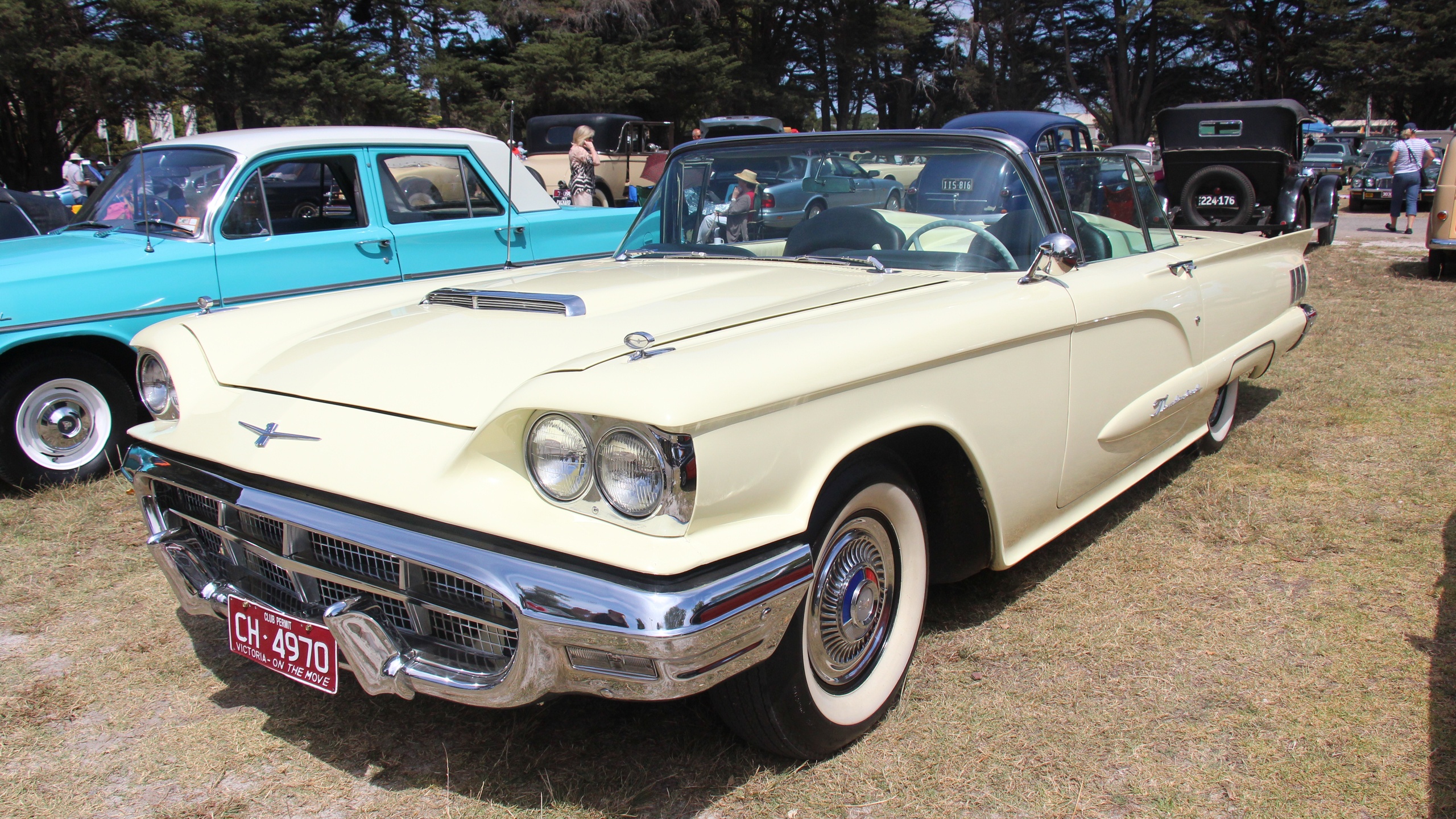
By 1960, the Squarebird had developed its own assured personality. Its roofline, substantial body and paired front seats separated it from an ordinary family Ford. This was a car for people who wanted something special without pretending they were driving to work by way of the Nürburgring. You could admire a sports car and still prefer arriving without the chiropractor knowing your first name.
Then came 1961, and the Thunderbird appeared to have been briefed by the aerospace industry. The rounded nose, pointed tail treatment and sleek body gave the Bullet Bird a genuinely different silhouette. It looked composed and slightly theatrical, the automotive equivalent of somebody who owned both a good dinner jacket and a model rocket.
The interior mattered just as much. A prominent console made the front seats feel individually important. The Swing-Away steering wheel became a particularly memorable convenience: slide the wheel aside to make entry and exit easier. Today we get a touchscreen tutorial. Ford gave you a steering wheel that politely moved out of your way.
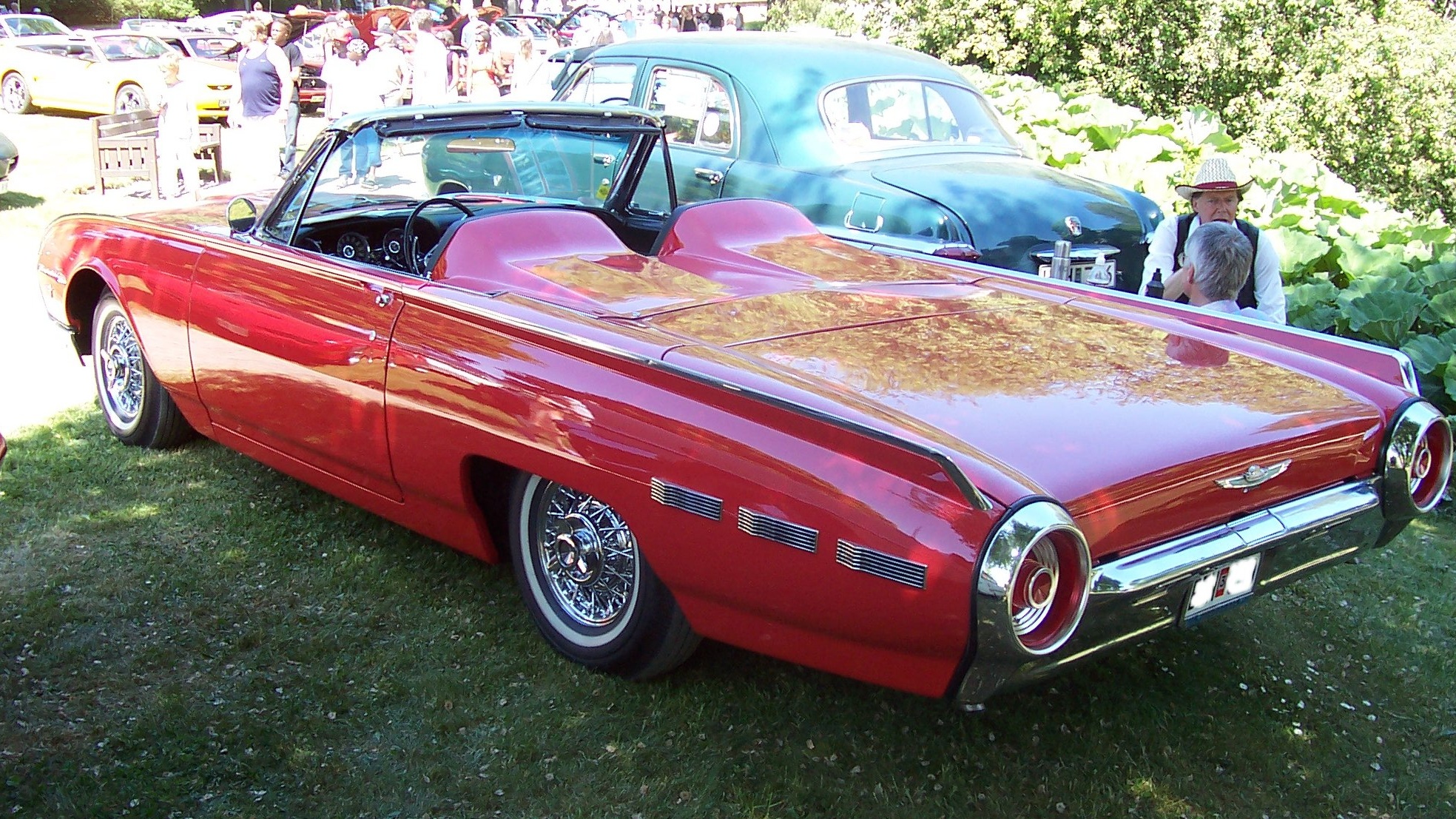
For 1962 and 1963, the Sports Roadster added a removable tonneau over the rear seats, making the four-seat convertible resemble a two-seater. It was a wonderfully elaborate answer to a question only a Thunderbird owner would ask: can I have practicality, but conceal the evidence?
The 1964 redesign is where the car in our lead photograph enters. Ford traded some of the Bullet Bird’s rounded drama for a more formal, sculpted shape. The broad grille, deeply defined sides and rectangular rear-light treatment gave the car substance without making it look clumsy. With the roof down, the wraparound rear seating and handsome console remained part of the show.
Ford’s contemporary brochure specified a 390-cubic-inch V8 rated at 300 horsepower, coupled to Cruise-O-Matic. Those are period factory ratings, not directly comparable to today’s net horsepower figures. More important to the character was the package: power steering, power brakes and relaxed automatic progress. The convertible’s folding top disappeared beneath the rear deck, leaving a clean profile rather than a fabric bundle announcing where the roof had gone.
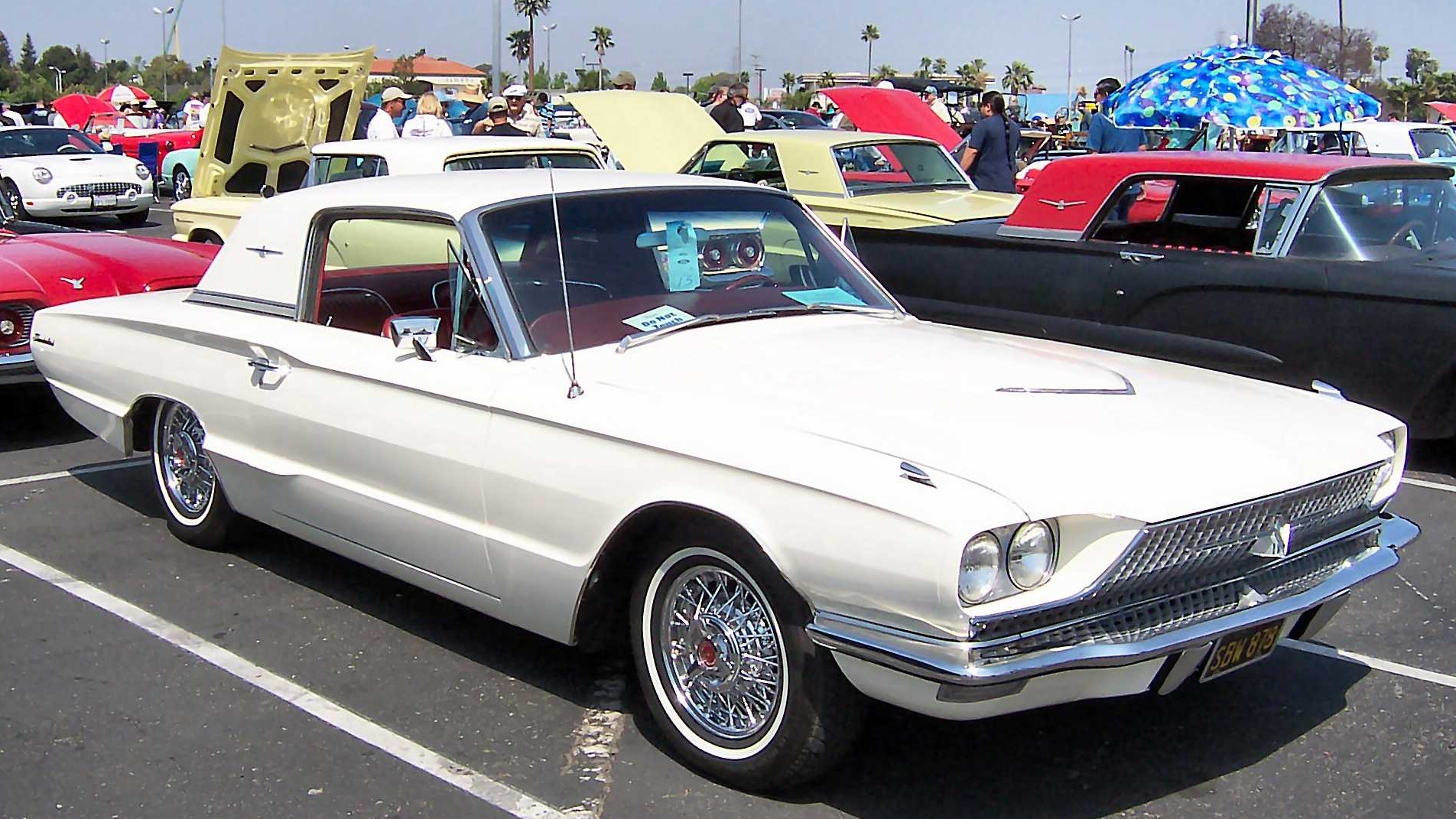
The improvements kept arriving. Ford’s 1965 brochure introduced front disc brakes and sequential rear turn signals. One helped this substantial machine stop; the other ensured that even turning left deserved choreography. For 1966, buyers could order the 428-cubic-inch V8, advertised at 345 horsepower. Because apparently a Thunderbird needed another way to make a perfectly ordinary errand feel official.
These cars reward looking beyond the badge. Examine the body, trim, interior and convertible mechanism as carefully as the engine. A beautiful photograph can conceal expensive work; a documented, properly sorted car offers a much better starting point than somebody’s confident explanation that the top “just needs adjusting.”
The appeal is straightforward. These Thunderbirds were designed around the pleasure of the journey, with controls you could see, seats you could settle into and styling that did not need an animated welcome sequence to establish its identity.
The little two-seat Birds deserve their following. But the larger 1960–66 cars deserve more than being treated as the relatives who arrived after the interesting people left. Especially a 1964 convertible. Give it a little sunshine and an open road, and the case practically argues itself.
Reference: Original photograph, photographer attribution and license.