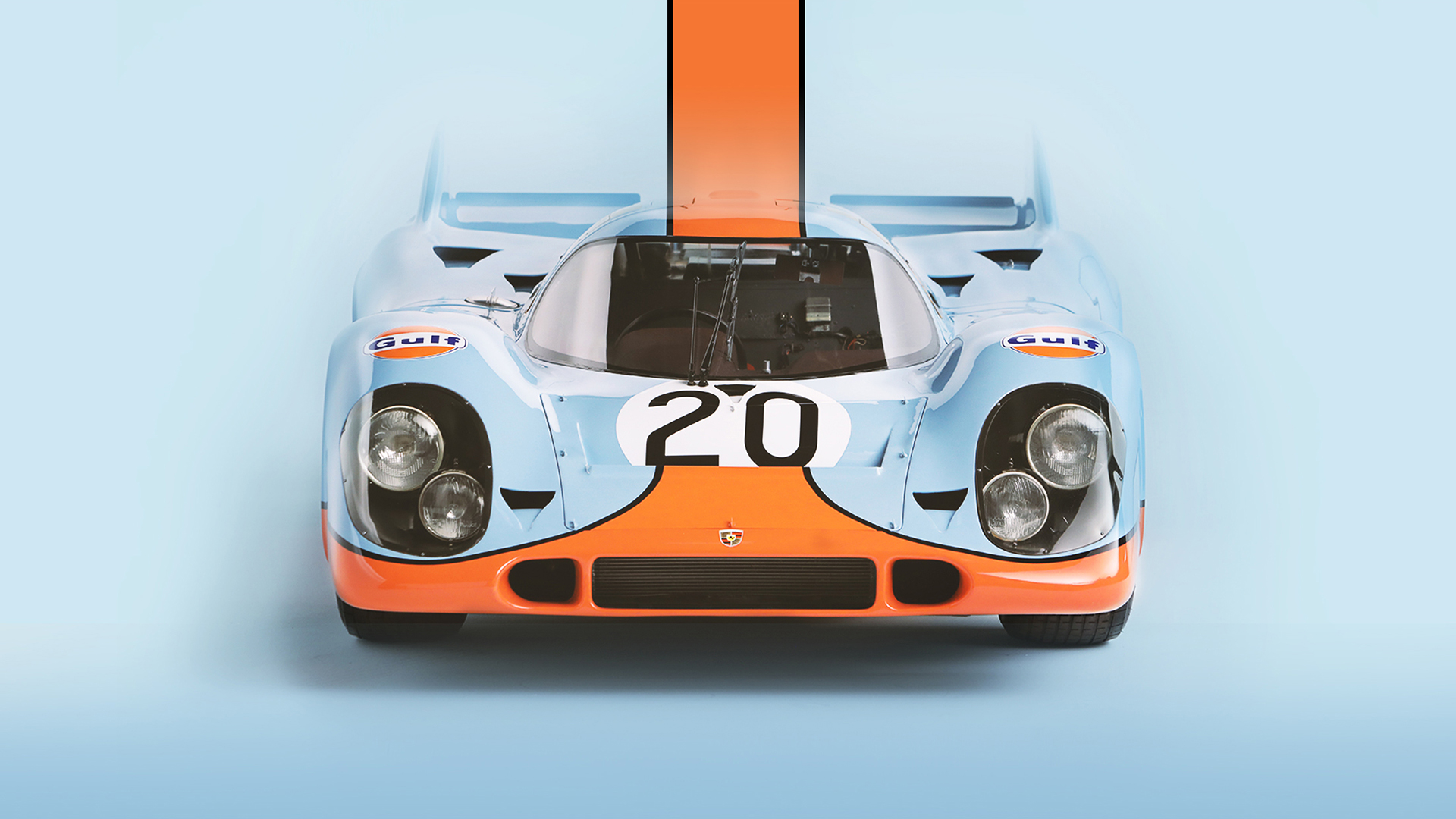

Start with the blue and orange. Before the specifications, before the chassis numbers, before somebody at a concours begins a sentence with “Actually,” there is that image: a Gulf-liveried Porsche 917, absurdly low, apparently travelling at 200 mph while parked. Steve McQueen understood what the camera would see. Here was a machine that needed very little dialogue. Preferably none while the engine was running.
In the 1971 film Le Mans, McQueen’s character Michael Delaney starts in the number 20 Gulf Porsche. That screen identity became part of the car’s mythology. But the 917 had already earned its place in racing history the difficult way: by terrifying people, being improved by very clever people, and finally beating everyone who mattered. Hollywood supplied the close-up. Porsche had supplied the plot.
The ambition was straightforward. Porsche wanted an outright victory at the 24 Hours of Le Mans. Class wins were lovely, and the company had plenty, but there comes a point when being congratulated for your category feels like receiving an award for the nicest tie at somebody else’s wedding. Ferdinand Piëch’s answer was a new sports-racing car with twelve cylinders and very little interest in modest expectations.
The regulations created the opening. A five-liter sports-car category required a production run for homologation, reduced to 25 examples. Building that many serious racing cars before knowing whether the concept worked was a remarkable commitment. Most businesses would have requested a feasibility study. Porsche arranged the cars in the yard and invited the inspectors.
The 917 appeared at Geneva in March 1969. Hans Mezger led the overall development and designed its twelve-cylinder engine. In initial form, the air-cooled 4.5-liter unit produced approximately 580 PS, roughly 572 horsepower. The engine’s opposing cylinder banks kept the installation low, although the familiar “flat-twelve” description can conceal the distinction between a 180-degree V12 crank arrangement and a true boxer. It was not simply two road-car engines persuaded to cooperate over lunch.
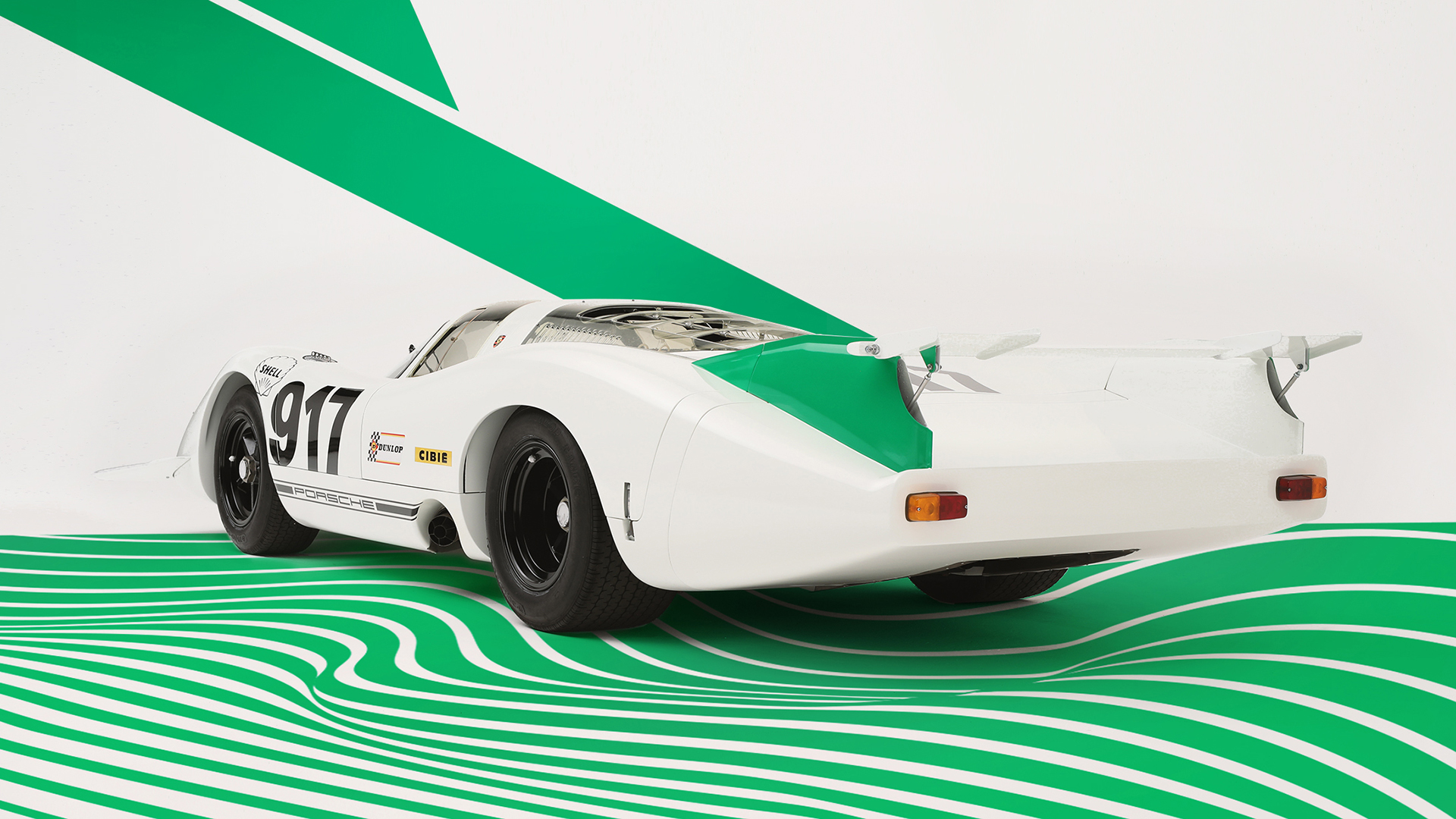
Porsche’s account of the project describes a tubular frame weighing just 45 kilograms. Bodywork, structure and powertrain were all pursued with the same urgency. The resulting package looked less like something assembled for a twenty-four-hour endurance race than something an extremely ambitious person had prepared to escape gravity. Lightness was essential. So was the rather more complicated business of keeping the thing attached to the road.
That second requirement proved troublesome. Early 917s were fast but unstable, their aerodynamic thinking too heavily tilted toward low drag. The apparent contradiction is the heart of the story: a car can be slippery through the air while also being deeply unpleasant for the person attempting to steer it. A beautiful shape and an impressive maximum speed are not much consolation when the rear end starts offering its own opinions.
The first season was a warning against writing the victory speech before testing the car. At Le Mans in 1969, a 917 took pole, but none finished. Porsche’s older 908 came heartbreakingly close to winning, losing to the Ford GT40 of Jacky Ickx and Jackie Oliver. The new machine did secure its first major victory that August at the Österreichring, with Jo Siffert and Kurt Ahrens. The potential was obvious. So was the unfinished business.
The answer was development rather than a motivational slogan. Changes to the body and aerodynamics made the 1970 short-tail 917K a much more effective weapon. “K” refers to Kurzheck, short tail; it is not shorthand for a shorter wheelbase. Long-tail versions pursued the speed available on circuits such as Le Mans, where the Mulsanne Straight imposed its own priorities. The family was evolving into different tools for different jobs, rather than one supposedly perfect shape.
John Wyer’s organization brought Gulf colors and formidable racing experience to the program. At the 1970 Daytona 24 Hours, the short-tail cars delivered a one-two finish. That mattered because endurance racing has a merciless way of separating speed from durability. Being spectacular for a few laps is excellent entertainment. Remaining spectacular after the spectators have eaten dinner, gone to sleep and returned for breakfast is a more convincing engineering achievement.
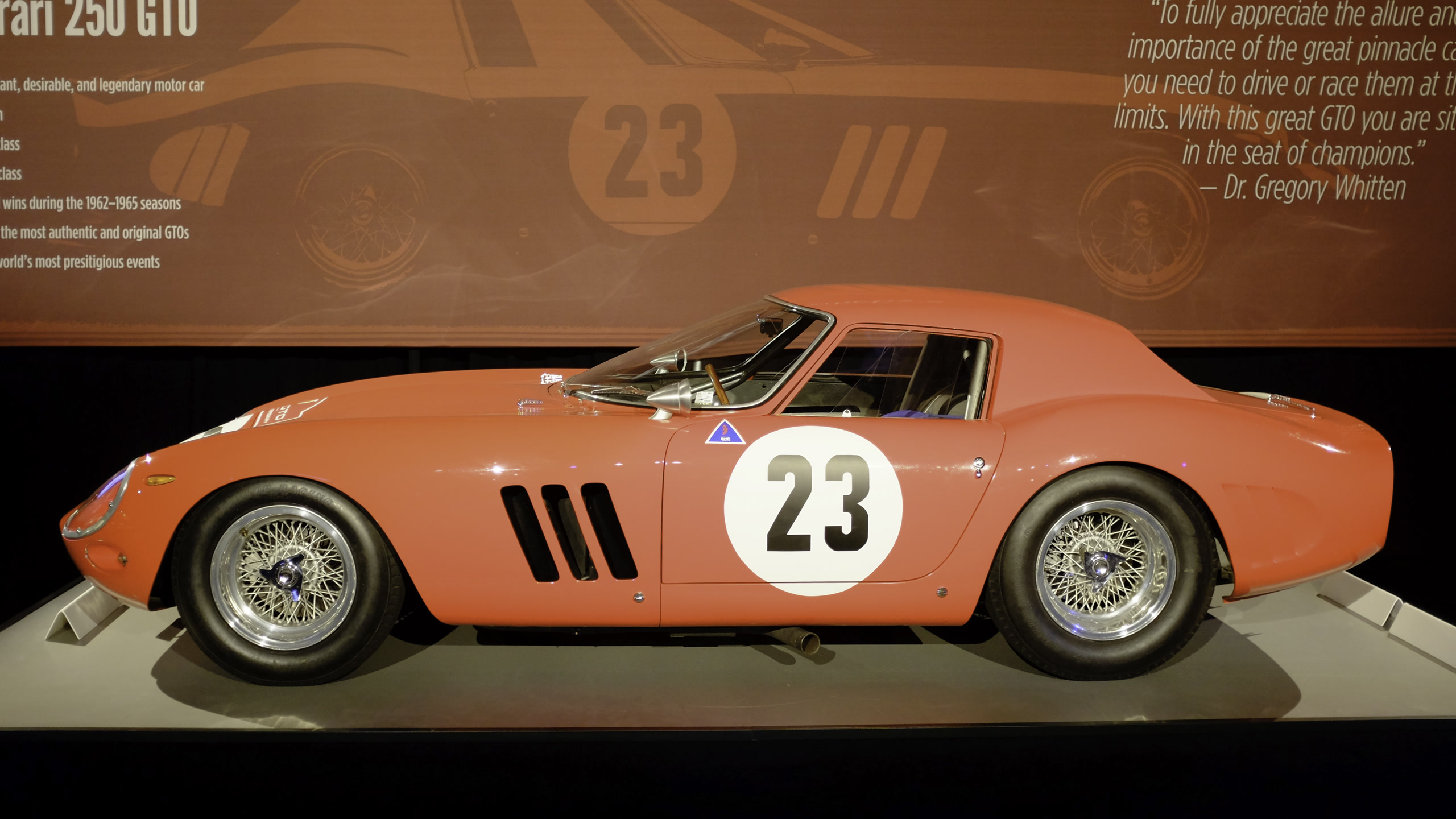
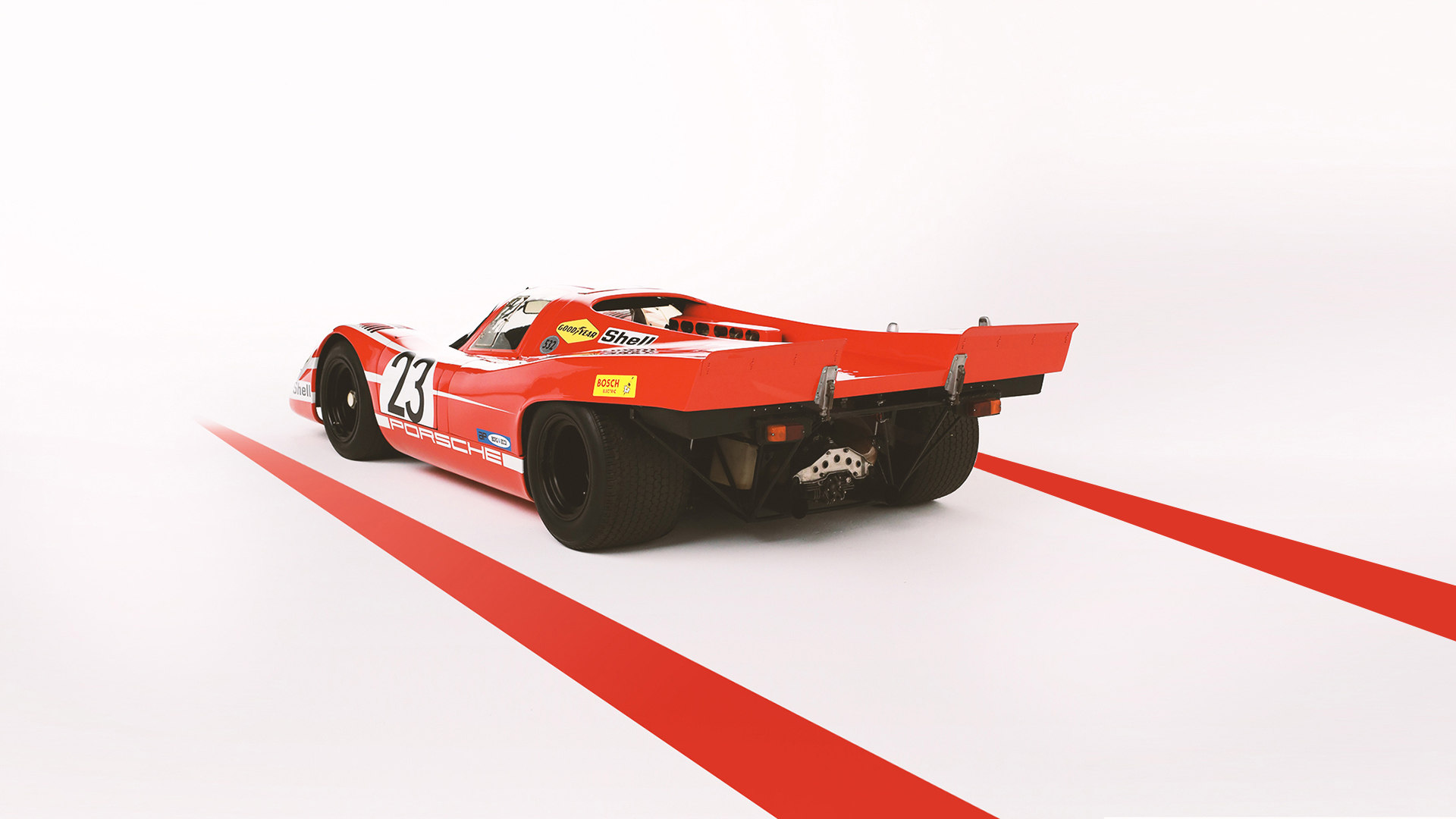
Then came Le Mans. In 1970, Hans Herrmann and Richard Attwood drove the red-and-white number 23 Salzburg 917K to Porsche’s first overall victory. Remember that number, because popular culture has been rearranging this story’s furniture ever since. The Gulf cars became the posters, but the Salzburg car got the trophy. The Martini-entered long-tail 917 of Gérard Larrousse and Willi Kauhsen finished second. Porsche had finally turned the objective into a result.
There is something particularly satisfying about Attwood and Herrmann’s win. Endurance racing rewards a complete performance: speed, reliability, judgment and the ability to continue when other people have run out of any one of those things. The 917 had arrived as an extraordinary technical proposition. Winning Le Mans made it a proven racing car. The difference cannot be measured by looking at it under show lights.
The following year brought another victory, this time for Helmut Marko and Gijs van Lennep in the number 22 Martini 917K. Their car used a magnesium tubular frame, an extreme expression of the weight-saving program. They completed 397 laps and established a distance record that stood until 2010. Consider that interval. Whole generations of racing technology came and went before the 1971 mark finally fell.
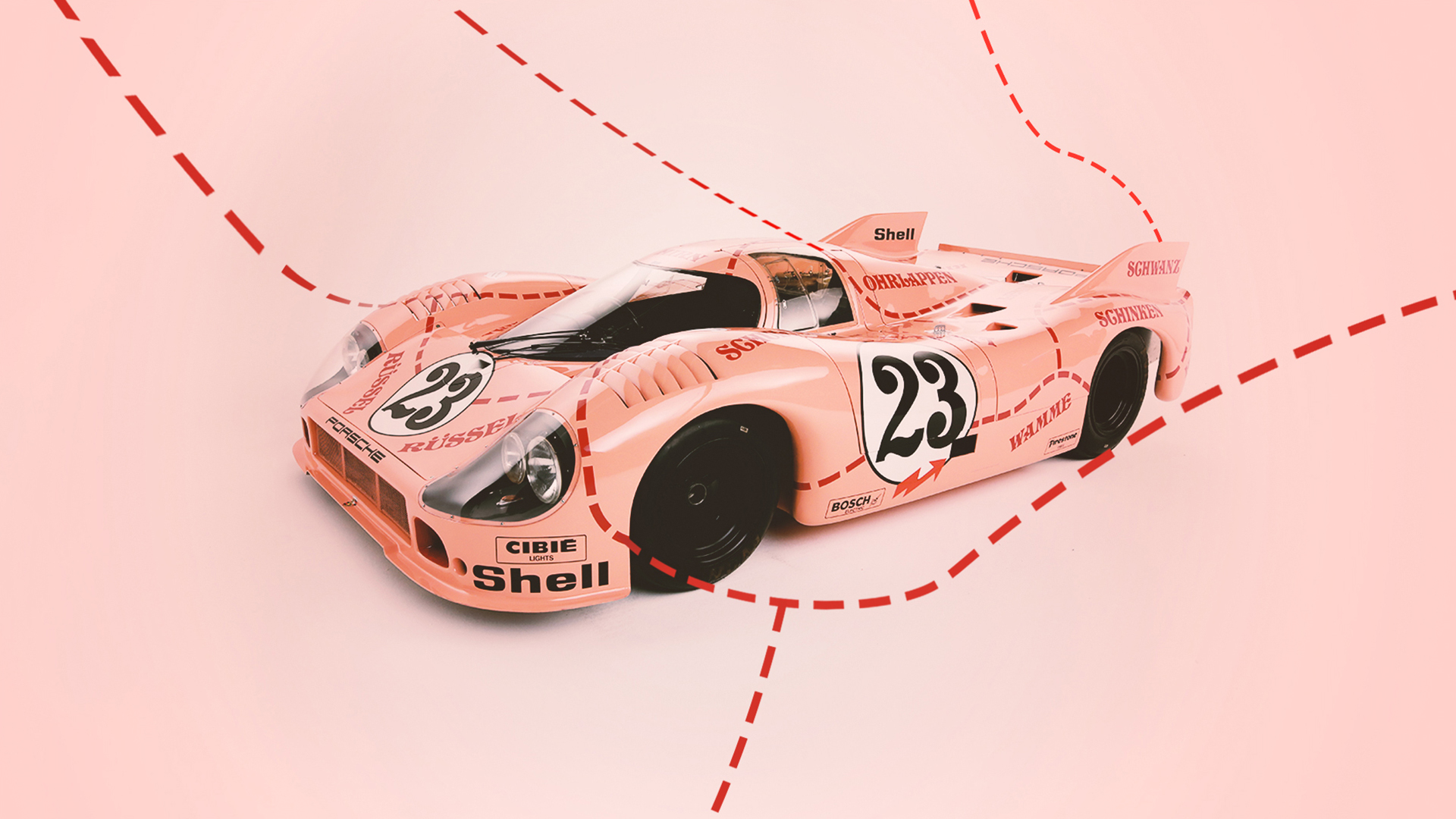
Not every 917 needed a trophy to become memorable. The broad-bodied 917/20 acquired its pink paint and butcher’s-cut markings, becoming the Pink Pig. The psychedelic long-tail livery had already demonstrated that a racing car could look as though its paint department had been left unattended at a music festival. These identities helped make the 917 unusually recognizable. You could love the engineering and still have a favorite color scheme.
Which brings us back to McQueen. Le Mans was released in 1971, using the world of the 1970 race as its setting. Michael Delaney was fictional; Jo Siffert and Brian Redman, the drivers of the real 1970 number 20 Gulf entry, were not. Nor was that real race car the overall winner. Sorting those facts out does not diminish the film. It prevents an excellent movie from quietly rewriting the results sheet.
There is also no single shortcut through the film’s car identities. Multiple machines were involved in the production. Mecum identifies chassis 917-022, bought by McQueen’s Solar Productions, as his number 20 hero car. That is a specific chassis history, not a license to call every blue-and-orange 917 “the McQueen car.” Paint is persuasive. Documentation is better. The distinction becomes rather important when a conversation progresses from admiration to a purchase agreement.
For all its glamour, the film’s lasting achievement was to let the machinery occupy the center of the frame. The Porsche’s low roof, broad haunches and impatient mechanical presence did the work. A modern racing film can explain everything, underline it, and add an orchestral warning that something exciting is happening. The 917 makes a strong argument for simply letting the audience hear what is coming.
Regulation changes closed the 917’s original top-level Le Mans chapter after 1971, but Porsche did not send the idea into retirement with a carriage clock. The next great stage was Can-Am. Turbocharged, open-cockpit 917/10 and 917/30 variants brought the concept into a different kind of racing, with outputs climbing beyond 1,000 PS. George Follmer took the 1972 championship; Mark Donohue followed in 1973 with the Penske 917/30.
The 917/30’s 5.4-liter twin-turbo engine and enormous performance made the earlier coupe seem almost restrained, which is rather like calling a thunderstorm a little damp. Porsche records six wins from eight races for Donohue’s 1973 campaign. In 1975, a modified 917/30 went to Talladega and established a closed-course lap-speed record of about 221 mph. The basic idea had travelled a very long way from that nervous first season.
That arc is why the 917 remains so compelling. It contains the ambition, the mistakes, the engineering corrections and the victories. It also contains a film star, a pink pig and enough horsepower to make the accounting department quietly close its door.
Look at the Gulf number 20 again. Enjoy the movie connection, absolutely. But behind the famous colors is a much better story than a celebrity association: a manufacturer deciding that being excellent in its own class was no longer enough, then doing the difficult work required to win outright. The camera merely made sure the rest of us could not look away.
Reference: Porsche Newsroom: 917 history and editorial photography.