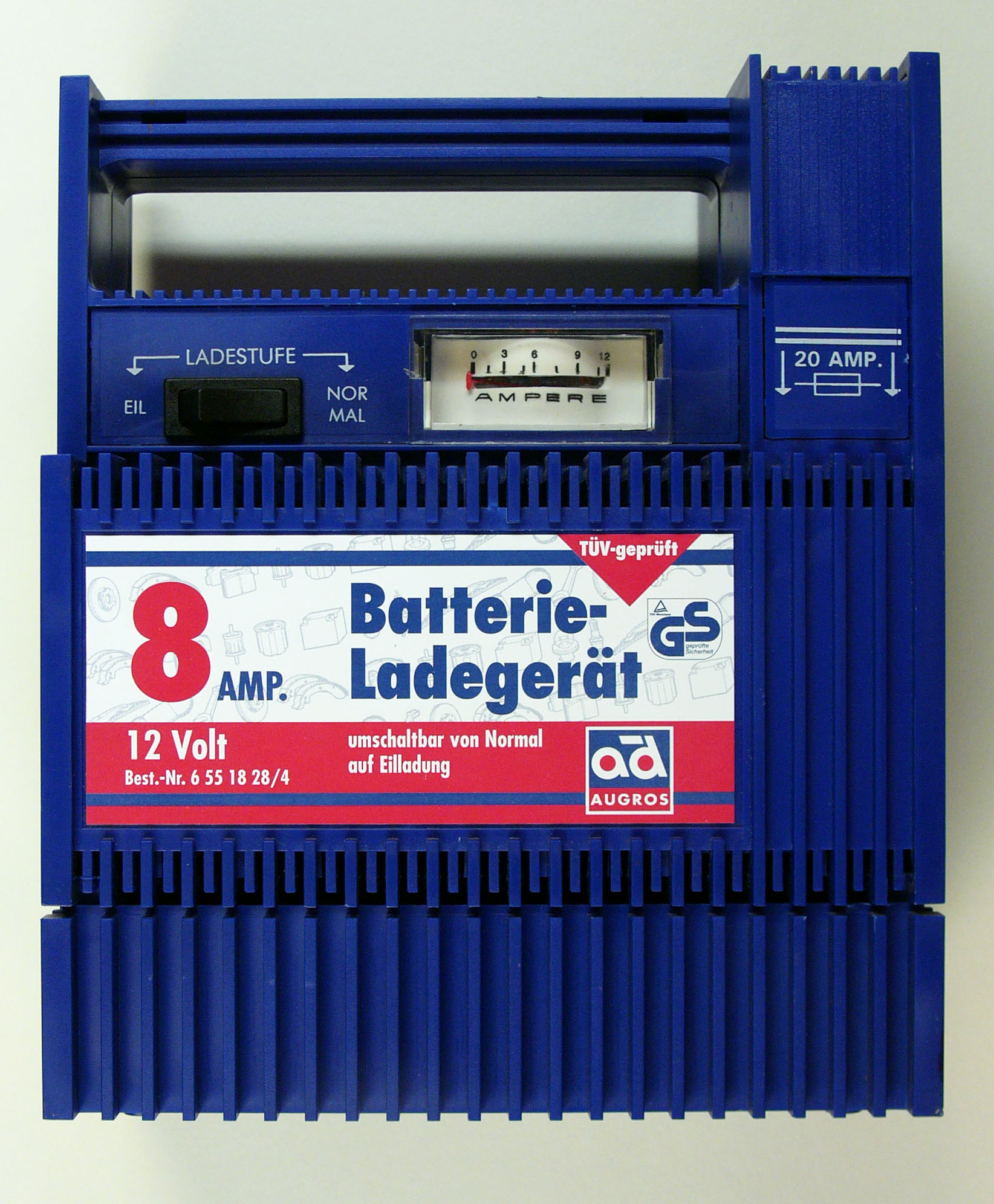

A polished classic can make a splendid entrance. A polished classic with a flat battery makes a splendid obstacle. The difference may be a small box under the hood that receives rather less attention than the paint.
Battery maintenance need not become another collecting hobby. Begin with the battery actually installed in the car, not the one the factory fitted decades ago and not the one somebody remembers buying.
Read the label before the charger
Write down the rated voltage, battery type and model. Match the charger to those particulars. A car that has been converted or restored may no longer match the assumptions in an old parts catalogue.
Battery Tender’s classic car guidance distinguishes 6, 8 and 12 volt systems. It warns against using a 12 volt charger on a 6 volt battery. Its useful lesson is compatibility, not a universal shopping prescription. Read both manuals before connecting anything.
Chemistry is another separate question. CTEK identifies wet cell, calcium and AGM as versions of lead acid battery technology with different maintenance requirements. A charger’s attractive casing tells you precisely nothing about which programmes it supports.
The buttons are not interchangeable
Even a familiar label deserves checking against the battery manufacturer’s instructions. OPTIMA specifically warns against gel or combined gel and AGM settings for its batteries in its published charging guidance. That is a particularly good reason not to choose a mode because the initials look approximately right.
Recovery or reconditioning programmes deserve the same caution. They are not an extra helping of electricity to be applied whenever the car seems sulky. Confirm that a mode is permitted for the particular battery and vehicle before using it. Ask the manufacturer or a qualified technician when the combination is unclear.
Maintenance is a routine, not a souvenir
For a car that is used only occasionally, OPTIMA recommends keeping the battery properly maintained with a suitable tender or maintainer. Follow the unit’s instructions for long term use, installation and inspections. A device intended for maintaining charge should not be confused with an old charger that simply keeps delivering current.
Give the arrangement a sensible home. Keep cables out of the path of tyres, doors and moving parts. Follow the equipment’s ventilation and environmental requirements. Do not charge a damaged or frozen battery. If the case is swollen, leaking or otherwise suspect, stop and have it assessed.
A notebook earns its place here. Record the battery model and installation date, the charger model, the selected programme and the inspection dates. Keep the manuals where you can find them. There is no concours trophy for locating a crumpled instruction leaflet behind the lawnmower, but it remains a useful achievement.
When starting is still a struggle
A voltage reading alone cannot establish the battery’s condition. Battery Tender notes that a battery may show a respectable resting voltage and still fail under the starter load. If charging does not solve repeated starting trouble, arrange proper testing rather than buying replacement parts by hunch.
That appointment may be less romantic than shopping for another steering wheel. It is also rather more likely to get you out of the garage.
For the rest of the layup plan, read Classic Car Storage, Give the Garage a Plan, https://www.themotorcarsociety.com/stories/classic-car-storage-give-the-garage-a-plan-03364ceb.html.
Sources rechecked November 16, 2026. Battery Tender classic car maintenance guide, https://www.batterytender.com/blogs/battery-tender-blog/classic-car-battery-maintenance-6v-8v-and-12v-storage-guide-2026. CTEK battery education, https://ctek.com/pages/education-car-batteries/. OPTIMA charging guidance, https://www.optimabatteries.com/experience/blog/should-i-start-my-car-to-charge-the-battery.
This is general ownership guidance. Follow the vehicle, battery and charger manuals for your equipment.
Reference: Battery Tender, classic-car battery maintenance.