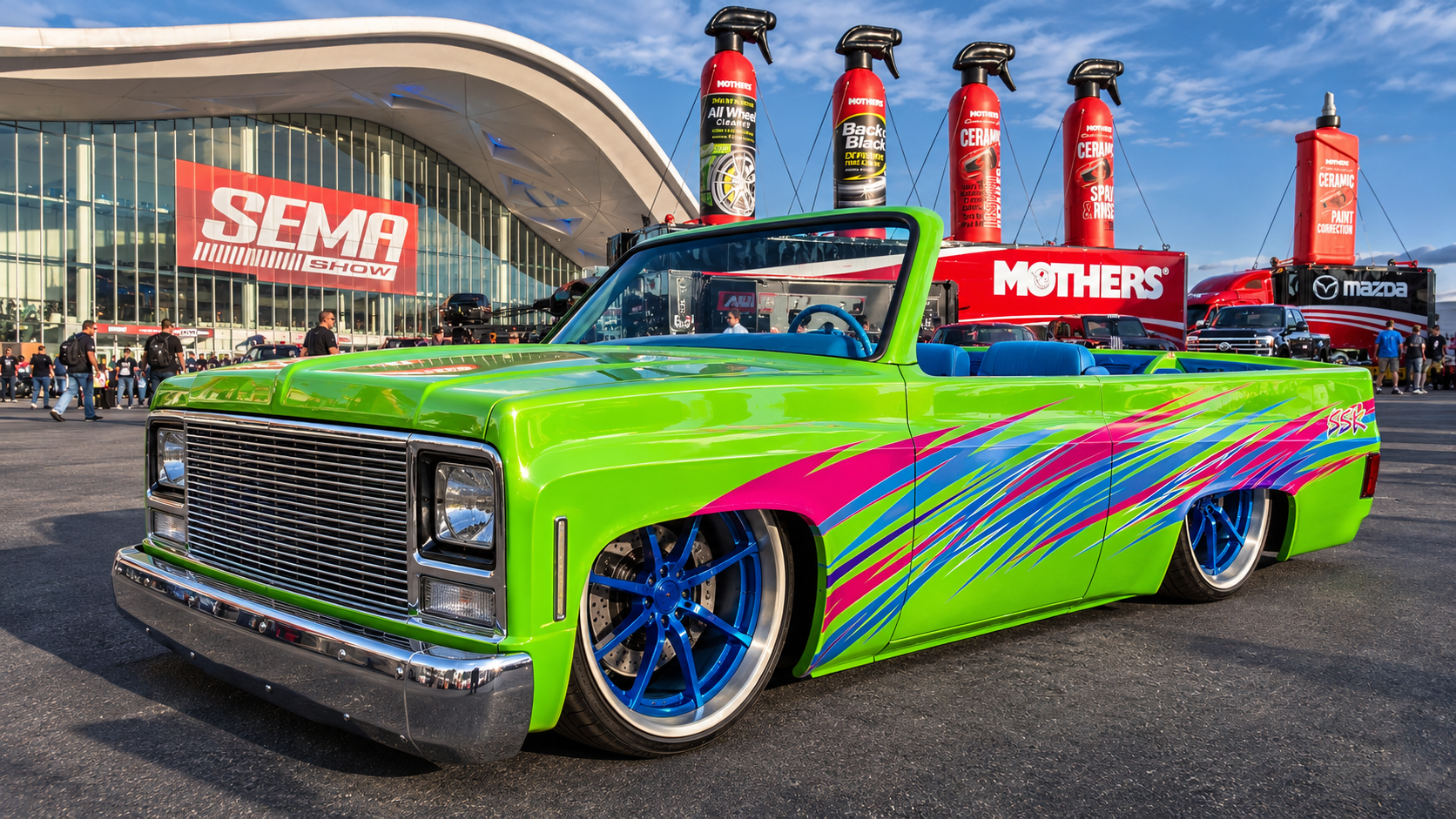

There are places where putting Corvette running gear beneath a food truck would trigger an intervention. At SEMA, it earns you a perfectly reasonable question: How fast are you hoping to deliver lunch?
Welcome to the automotive aftermarket’s annual gathering in Las Vegas, where the distance between a sensible idea and a spectacularly unreasonable one is generally measured in fabrication hours. This year’s selection included a Rolls-Royce with American V8 muscle, a tailored Capri and a Volkswagen celebrating Dan Gurney. Apparently, even restraint requires a substantial engineering budget.
SEMA has grown since its first show at Dodger Stadium in 1967. Back then, the performance business could gather beneath the stands. Today, the Las Vegas Convention Center accommodates a sprawling ecosystem of builders, equipment makers, restorers and people who can explain precisely why your perfectly functional suspension needs replacing.
They may have a point. Which is how these things start.
The most interesting builds in this year’s mix had something beyond a long list of expensive components. They had a point of view. Someone had decided exactly what the car ought to become, then spent the necessary time making the details agree.
Five examples made that argument well.
Recoil: Twelve Years and Still Causing Trouble
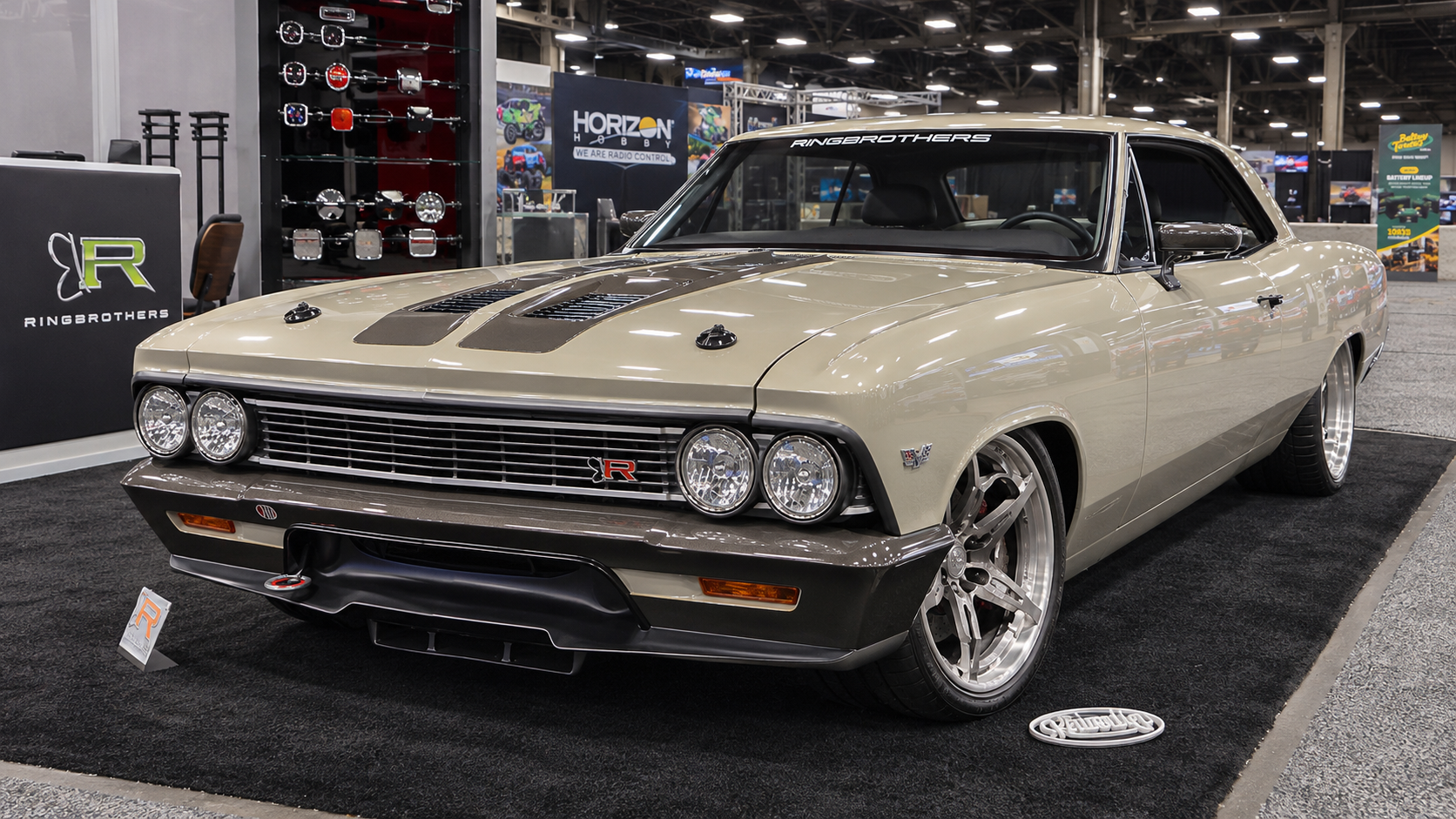
The Ringbrothers’ 1966 Chevelle, Recoil, returned with a useful reminder for an industry permanently hunting its next unveiling: a properly resolved design can survive the news cycle.
Recoil first appeared at SEMA in 2014. Twelve years later, its tucked bumpers, carefully shaped spoilers, carbon-fiber panels and aircraft-influenced interior still make a persuasive case for thinking before cutting. The Sand Storm paint lets the proportions do their work rather than demanding attention like a casino carpet.
There is, of course, a Whipple-supercharged, Wegner-built LS7 involved. Tasteful restraint has its limits.
Plenty of custom cars can tell you when they were built. Some practically announce the year through a loudspeaker mounted beside the unfortunate wheels. Recoil has avoided that problem. Its return to SEMA offered a lesson worth remembering before ordering anything described as the latest look.
Good proportions have an unusually generous warranty.
The Capri That Brought Its Tailor
Jordan Henke and JH Restorations approached their 1974 Capri Mk1 with considerable ambition and a reassuring grasp of proportion.
Finished in BASF Papaya Spark, the Canadian-built car wears a hand-fabricated metal widebody. Its Ford Racing 347 uses Borla eight-stack injection, giving the engine bay an appropriately theatrical focal point. There are more discreet ways to feed a V8. Fortunately, nobody here appears to have been shopping for one.
The widened body gives the familiar Capri shape more authority while retaining its identity. That distinction matters. It is remarkably easy to spend years improving a car until nobody can remember why they liked it in the first place.
The car reached SEMA’s Battle of the Builders Top 12. A substantial effort, then, from a coupe that once occupied a rather more modest place in the automotive pecking order.
Fast Food Gets Dangerously Literal
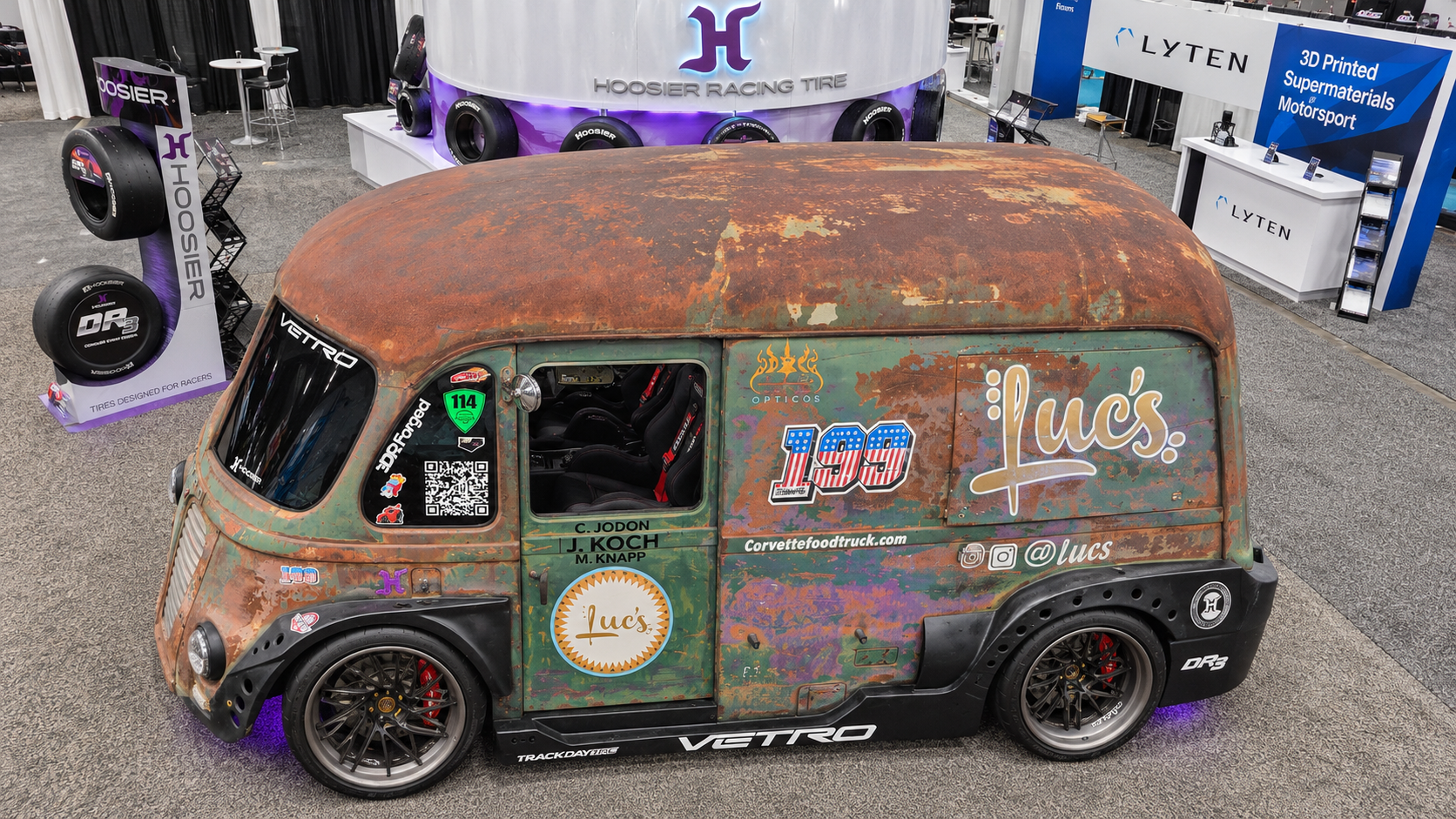
The Vettro combines a 1952 International Metro van with the foundation of a C8 Z51 Corvette.
Allow that sentence a moment to settle.
The weathered delivery-van body suggests a dependable business selling lunch. The Corvette underneath suggests that anyone arriving late may have to chase it.
Luc’s, the operation behind the project, describes a future speed-record attempt with a 130-mph target. That remains an ambition, rather than a record to put on the menu. Still, it represents an unusually vigorous interpretation of takeaway.
A food truck with this much engineering behind it also raises practical questions. Does the lunch special include aerodynamic considerations? At what speed does the soup become a passenger?
Whatever the eventual speed attempt produces, the Vettro has already contributed something valuable to the show: evidence that grown adults can possess serious technical skills and still have gloriously ridiculous ideas.
A Volkswagen With Gurney on the Door
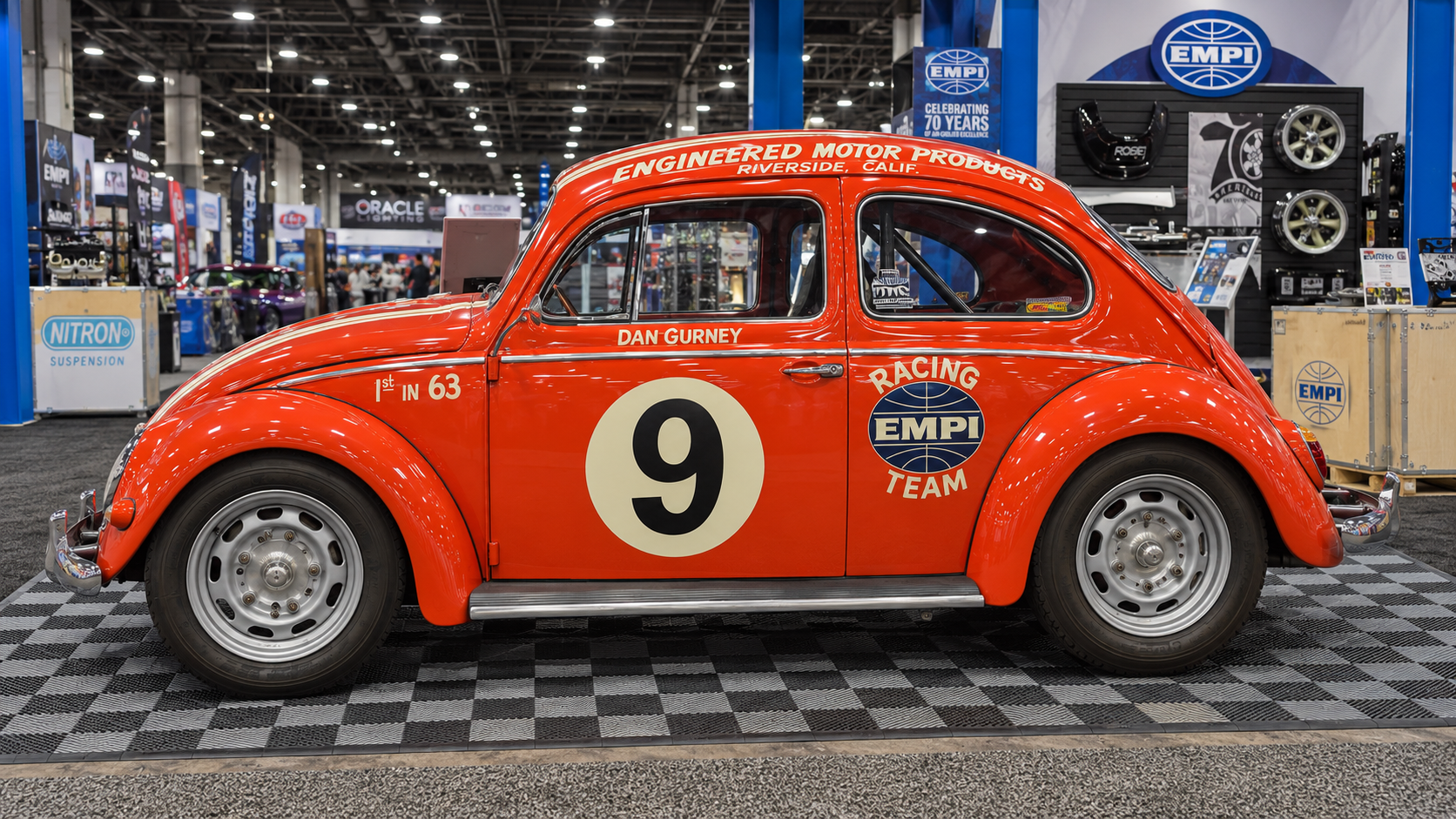
The orange EMPI tribute Beetle brought a different kind of appeal.
Its No. 9 markings and Dan Gurney association point back to the days when the Riverside Volkswagen specialists took a humble Beetle racing. EMPI’s own history records Gurney’s victory in the 1963 Nassau Grand Prix for Volkswagens, driving the company’s prepared car.
That history gives this tribute its substance. Gurney’s name supplies ample racing credibility; the Beetle supplies the wonderfully improbable silhouette.
Among the elaborate bodywork and formidable engine installations, there is something refreshing about a small Volkswagen recalling a time when ingenuity could send an unsuitable car out to cause trouble.
Motor sport has always benefited from someone declining to accept the obvious hierarchy. The expensive machinery gets the attention. Occasionally, the little orange car gets the last word.
A Silver Cloud With American Intentions
Kamaka Pocock’s 1956 Rolls-Royce Silver Cloud I looks capable of delivering a duchess to lunch. Its LS3 suggests the duchess has another appointment.
Built by Born Vintage Hot Rods, the car pairs that GM V8 with a 4L60E automatic, Kugel front suspension and a nine-inch rear axle. Champagne-gold paint and one-off Colorado Customs wheels complete a transformation that retains the Rolls-Royce’s considerable visual dignity.
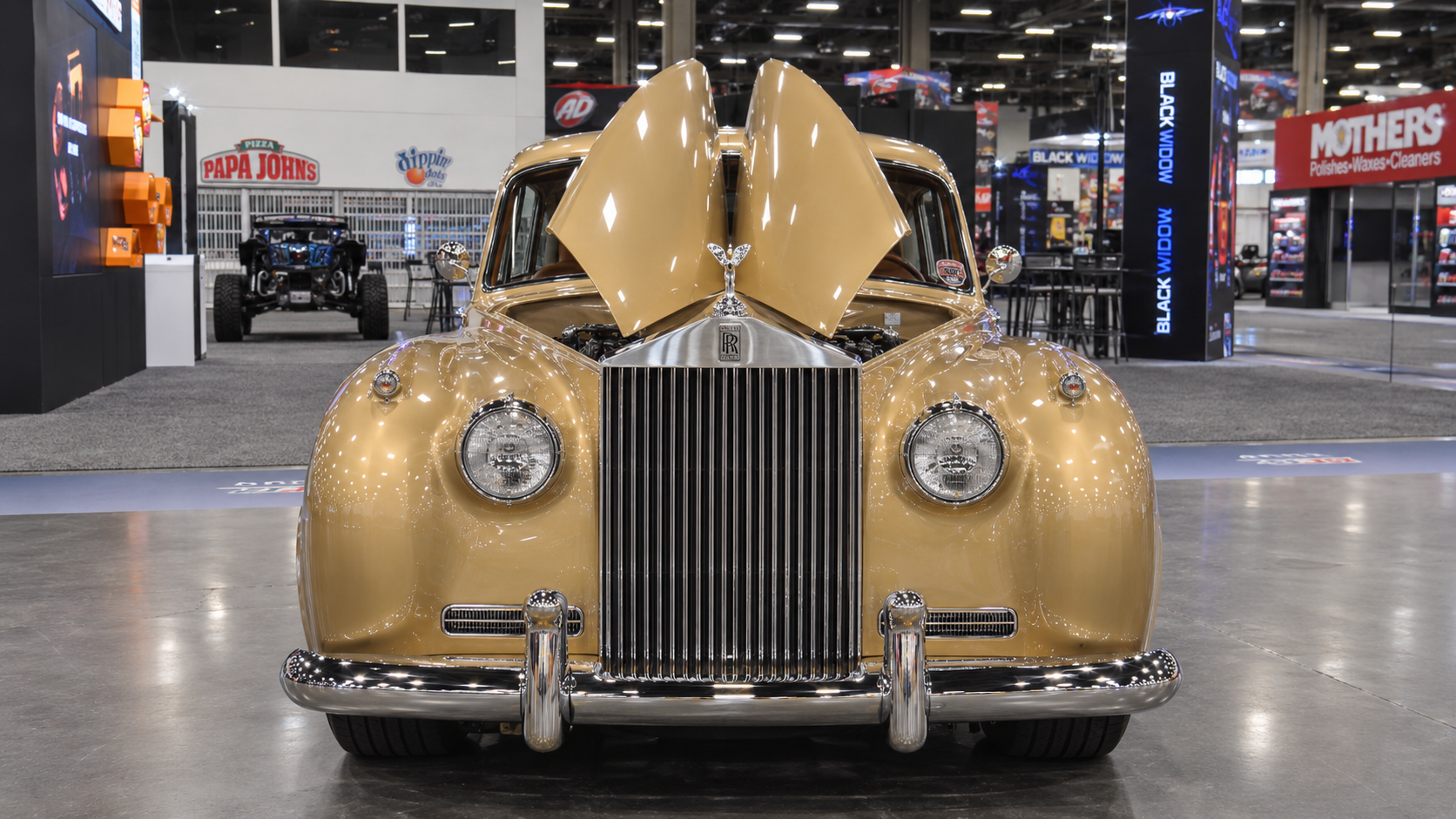
The builder also used factory Rolls-Royce components to help disguise the modern engine. That is a particularly pleasing detail. A little discretion beneath the bonnet seems appropriate, even when the powertrain has changed nationality.
The Silver Cloud reached the Battle of the Builders Top 12, providing a rather elegant demonstration of how hot-rodding can accommodate cars well beyond its usual American subjects.
There will inevitably be objections from the preservation contingent. There usually are. Somewhere, a man in a club tie is reaching for a strongly worded letter.
He may wish to admire the workmanship first.
The Useful Part of Excess
Together, they explain the enduring appeal of SEMA. Builders bring their ideas into the open, where the choices become visible: the proportion of an arch, the treatment of an engine bay, the care taken to preserve a car’s personality through substantial change.
Those are useful things to study, even if your own plans involve nothing more ambitious than improving a weekend driver.
Naturally, after looking at all this, those modest plans may require revision.
Keep the receipts. And perhaps avoid discussing the food truck until the family has finished dinner.