
Dodge introduced the R/T designation on the 1967 Coronet. The meaning was simple: Road and Track. The car was expected to perform on public pavement and remain useful when the road became a closed course and somebody started waving flags.
Then the redesigned Dodge Charger arrived for 1968, and R/T found the car it had been waiting for.
The 1968 Charger was a complete departure from the first-generation model. Designer Richard Sias replaced the earlier fastback shape with a tightly drawn Coke-bottle body, flying-buttress roof, recessed rear window, hidden headlights, and twin round taillamps.
The result looked less like a family automobile and closer to something that had escaped from a government wind tunnel carrying classified documents.
Adding the R/T package turned that body into a legitimate performance machine. This went well beyond badges and stripes. The Charger R/T came with heavy-duty suspension, upgraded brakes, dual exhaust, performance tires, and the kind of mechanical equipment required when your engine displaced more than seven liters.
The standard engine was Chrysler’s 440-cubic-inch Magnum V8, rated at 375 gross horsepower and backed by 480 pound-feet of torque. Buyers could choose a four-speed manual or TorqueFlite automatic transmission.
The automatic was hardly an apology. Chrysler’s TorqueFlite was strong, quick, and fully capable of transferring the 440’s considerable violence to the rear tires. The four-speed simply allowed the driver to participate more directly in the destruction.
For buyers who believed 440 cubic inches represented an unacceptable level of restraint, Dodge offered the 426 Street Hemi.
The Hemi carried an advertised 425 horsepower, two four-barrel carburetors, hemispherical combustion chambers, and enough mechanical complexity to make a dealership service manager quietly reconsider his career choices. It was expensive, temperamental in traffic, and brutally effective when given enough fuel and room.
Out of 17,584 Charger R/Ts built for 1968, only 475 received the Hemi. That leaves the Hemi cars rare, expensive, and surrounded by the usual arguments over documentation, replacement engines, reproduction tags, and somebody’s uncle who supposedly bought one new for $900.
The remaining 440-powered cars were hardly consolation prizes. A 440 Charger R/T could flatten pavement, consume rear tires, and turn a short trip to the grocery store into a municipal hearing.
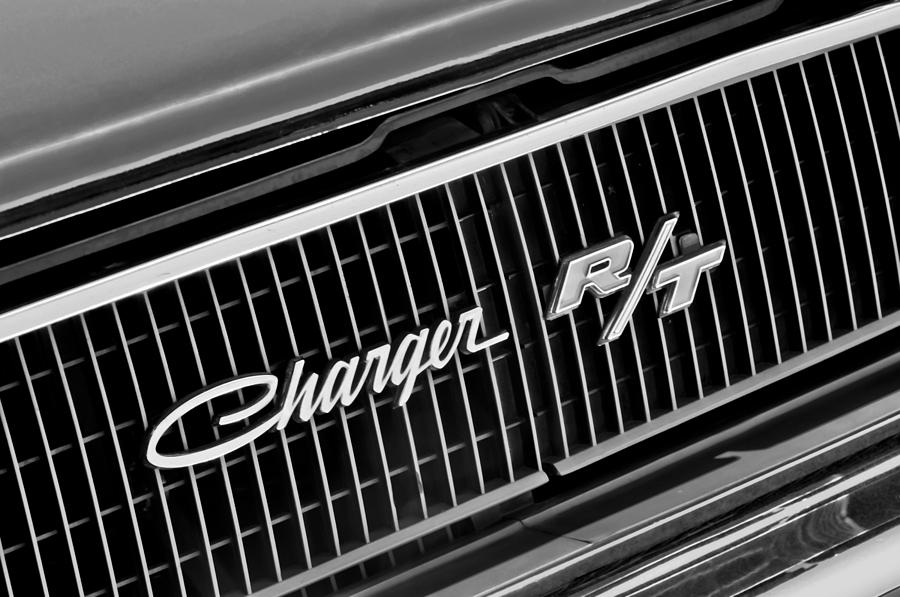
R/T identification appeared on the grille, rear panel, and body striping. Dodge also included the Charger R/T in its Scat Pack promotion alongside the Coronet R/T, Super Bee, and Dart GTS. The classic Dart wore GTS during this period, although later Dodge marketing departments eventually discovered that R/T letters could be attached to nearly anything with a battery.
In 1968, the badge still carried weight.
The Charger R/T also benefited from one of the finest casting decisions in movie history. A black 1968 Charger R/T chased Steve McQueen’s Mustang through San Francisco in “Bullitt,” absorbing jumps, hard landings, and several hubcaps that appeared to reproduce between camera angles.
The Mustang had the movie star. The Charger looked like the car you should worry about.
There was some irony in the Road/Track name. The Charger was large, heavy, and built with torsion-bar front suspension and a live rear axle. It handled better than its dimensions suggested, but nobody was going to confuse it with a small European sports car.
The road portion was undeniable. The track portion depended on which track, how long the straightaway was, and whether the corner workers had adequate insurance.
Later, Dodge spread R/T across the Challenger and other performance models. Decades afterward, the letters appeared on sedans, SUVs, and the modern Dart. Like most successful badges, R/T gradually moved from a specific mechanical promise toward a marketing identity.
The 1968 Charger R/T remains the clearest version of the idea. Big engine, upgraded chassis, serious brakes, aggressive bodywork, and no apology attached.
Two letters were enough.