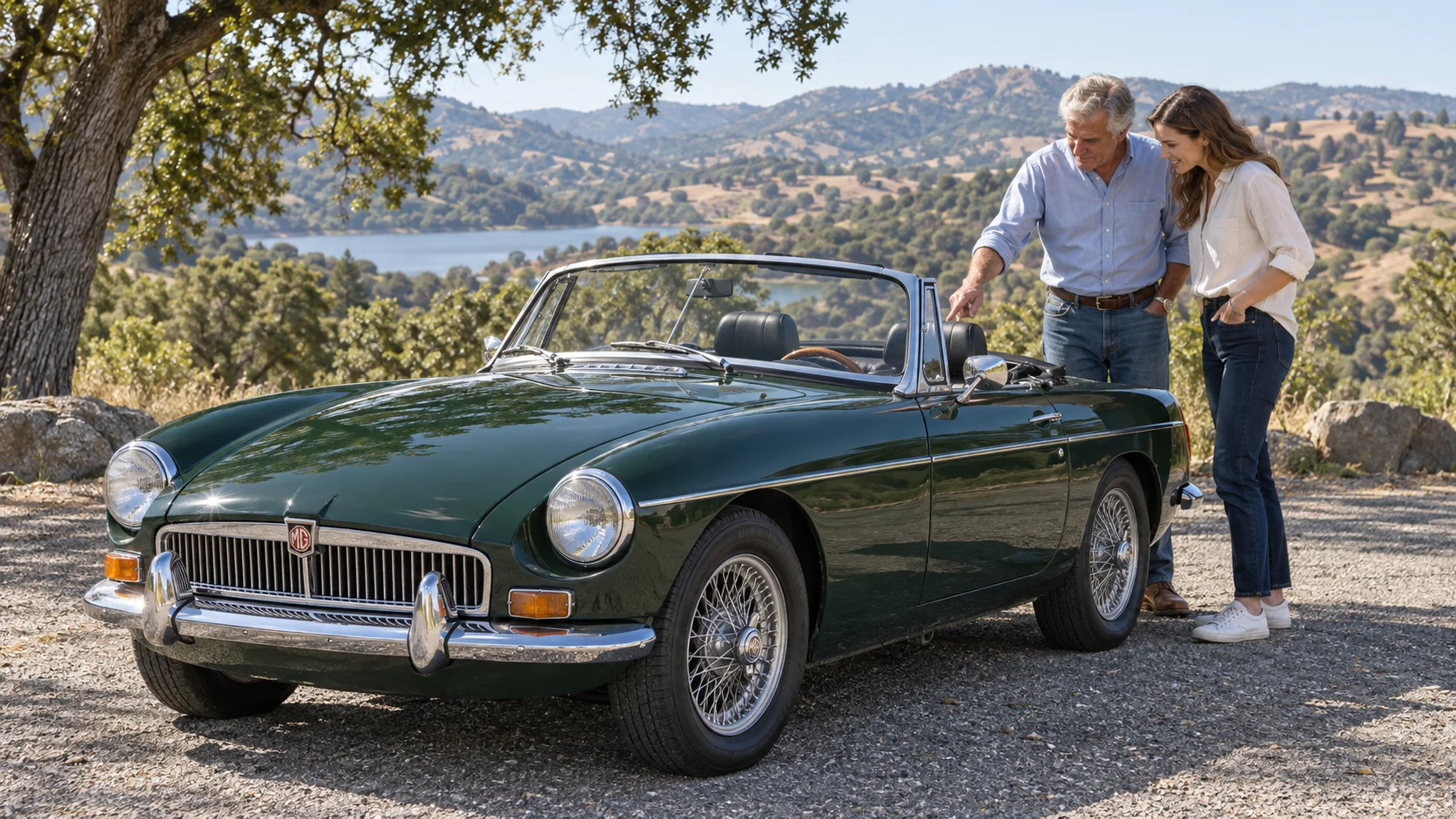

Somewhere at a car gathering, an owner is explaining why younger people have lost interest in old cars. A few feet away, a younger visitor is trying to work out whether it is acceptable to ask a question. The solution to both problems could be as simple as moving the folding chair and opening the passenger door.
Consider an MGB. It gives a newcomer something immediately understandable: a small open car, a steering wheel, a gear lever, and a view over the bonnet. Start there. Explain what you like about using it. Save the argument about the correct finish on a bracket until someone asks. People usually need a reason to care before they need the entire parts catalog.
That does not mean stripping the conversation of detail. Detail is often what makes these cars interesting. Explain why a control is there, how a repair was approached, or what changed when a previous owner fitted a different component. Give the visitor a way into the subject. A patient explanation can turn an unfamiliar machine into something a person can imagine understanding.
It helps to ask questions in return. What do they drive? What would they build? What cars do they photograph? Someone interested in a modified hatchback already understands the appeal of making a machine their own. There is useful common ground in handling, sound, design, and the satisfaction of fixing a problem. Start with whichever part makes their eyes light up.
Money belongs in the conversation too. Calling any classic affordable without discussing its condition and running costs is a fine way to lose a newcomer later. Purchase price is only the opening expense. Storage, insurance, maintenance, and repairs all need consideration. Help someone understand the responsibilities before selling them the picture of a perfect Sunday morning.
There are ways to take part before buying. Invite a visitor along to a club meeting, introduce a helpful workshop, or explain a job while it is being done. A passenger ride in a properly maintained car can make a stronger impression than a lengthy speech beside it. Participation gives people something to remember and a reason to return.
Longtime owners benefit from this exchange as well. A younger car person may be good at scanning photographs, organizing records, filming a repair, or finding someone who knows an obscure part. Knowledge can move in both directions. The person asking the beginner question today may be the one who helps preserve a collection of photographs next month.
For a publication, that is a story worth following. Put an experienced owner and a newcomer beside the same car. Let the questions stay in the finished article, including the basic ones. Photograph the explanation. Show what each person learned. Readers can join the conversation even if the nearest MGB is several counties away.
The owner gets to share something that matters. The visitor gets access to a world that can look closed from the outside. And the little British roadster gets another person who understands why somebody has spent so many Saturdays keeping it ready. That seems a pretty good return on opening a door.