
Denise McCluggage did not wait for motor racing to become reasonable. She arrived when the sport was fast, dangerous and perfectly comfortable telling a woman where she did not belong. Her answer was to race anyway—and to write about it better than nearly anyone standing on the other side of the fence.
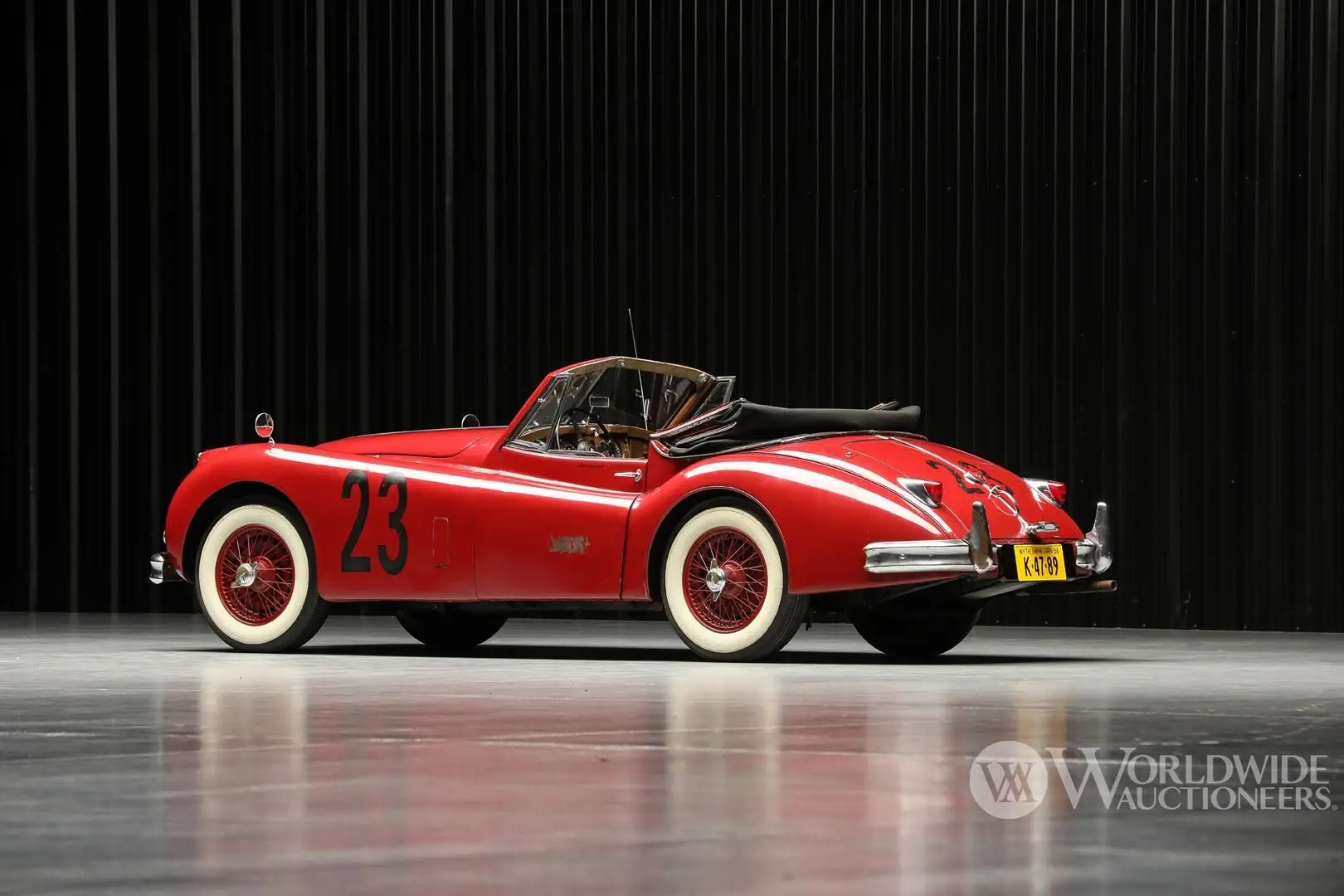
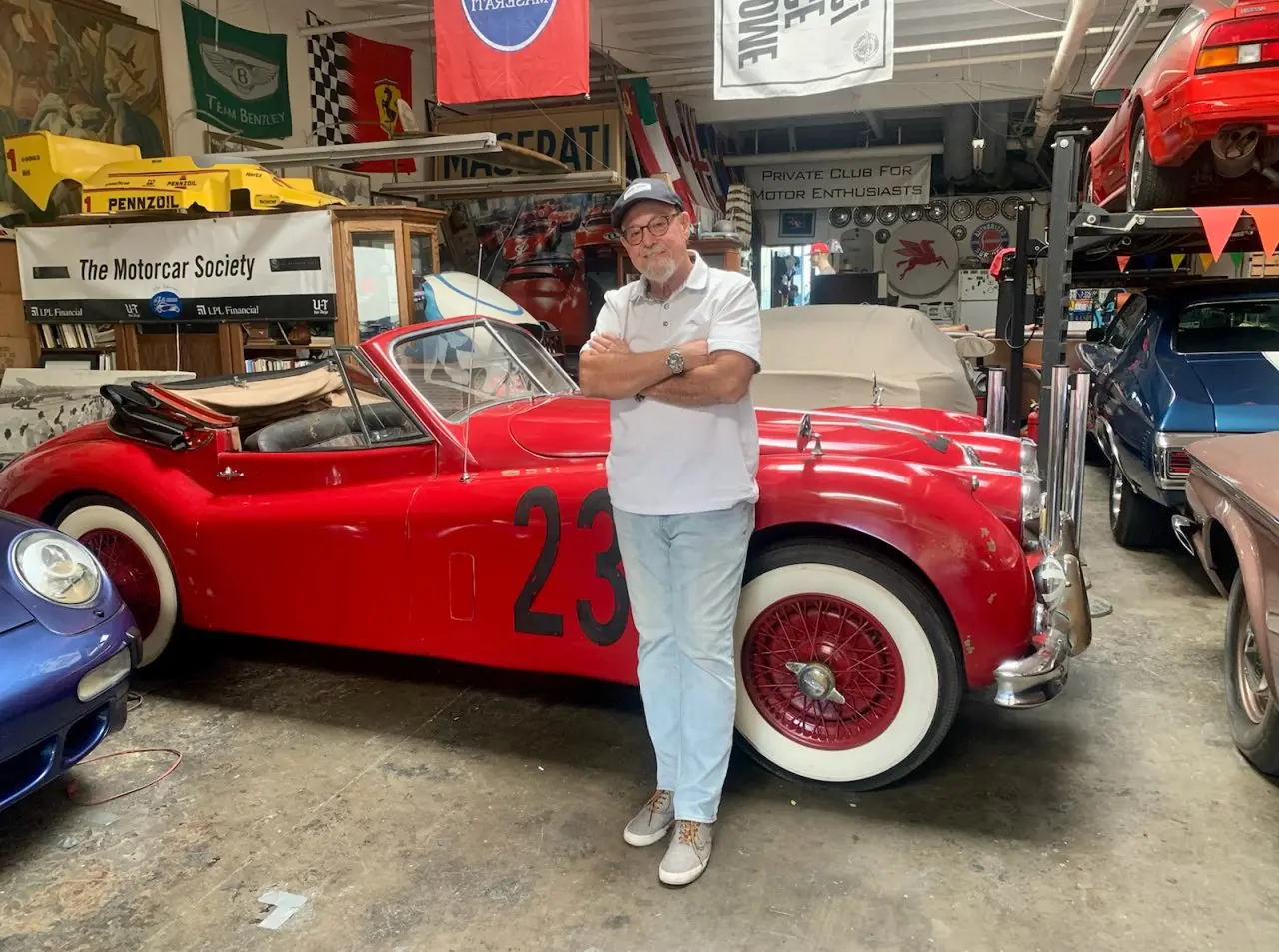
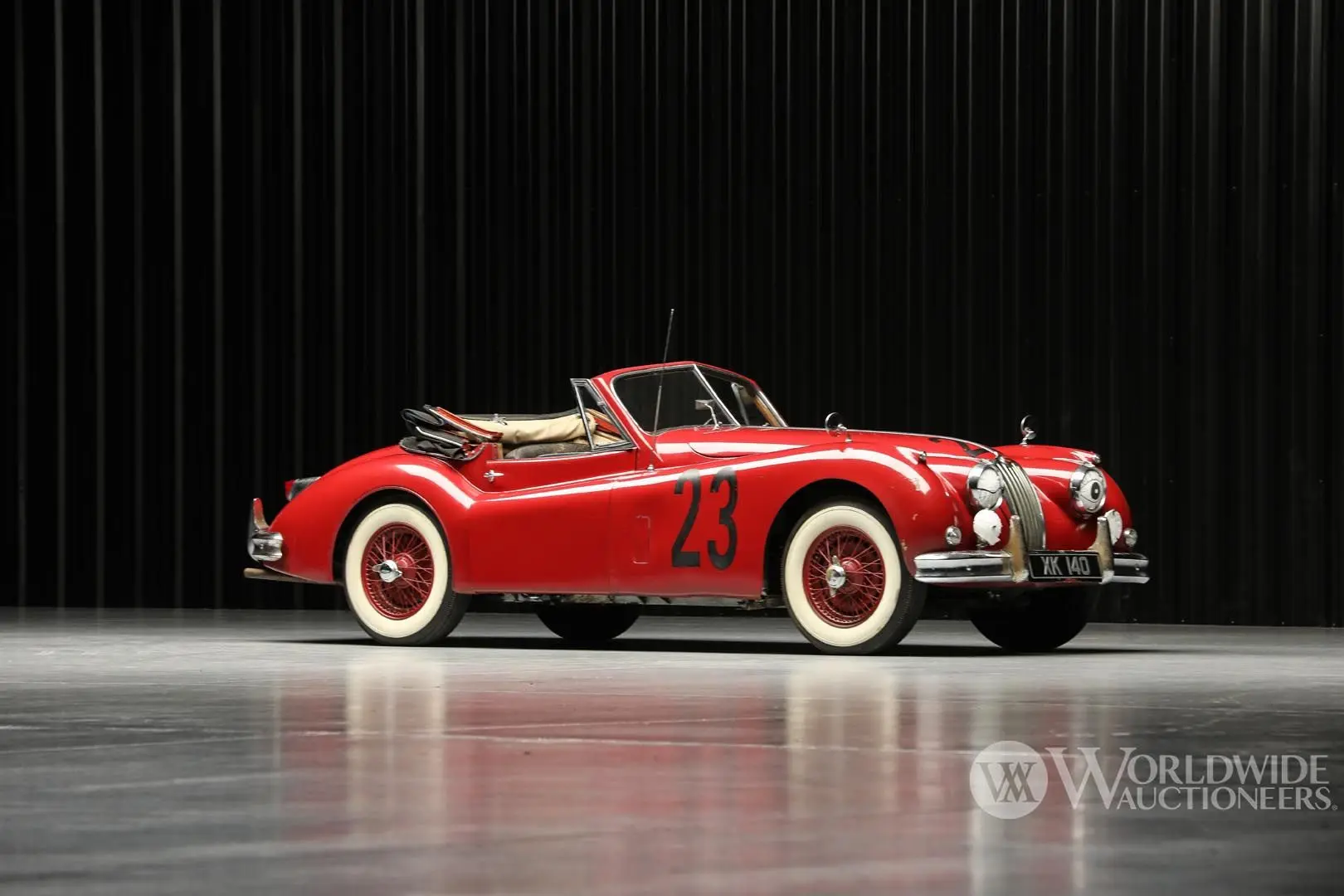
The car at the center of this story is a 1956 Jaguar XK140 MC Drophead Coupe, chassis S818207. It came to McCluggage through Briggs Cunningham, the American sportsman and team owner whose white-and-blue cars had already carried the country’s racing ambitions to Le Mans. McCluggage met Cunningham while covering a yacht race. He recognized ability when he saw it and gave her the chance to prove it in a car.
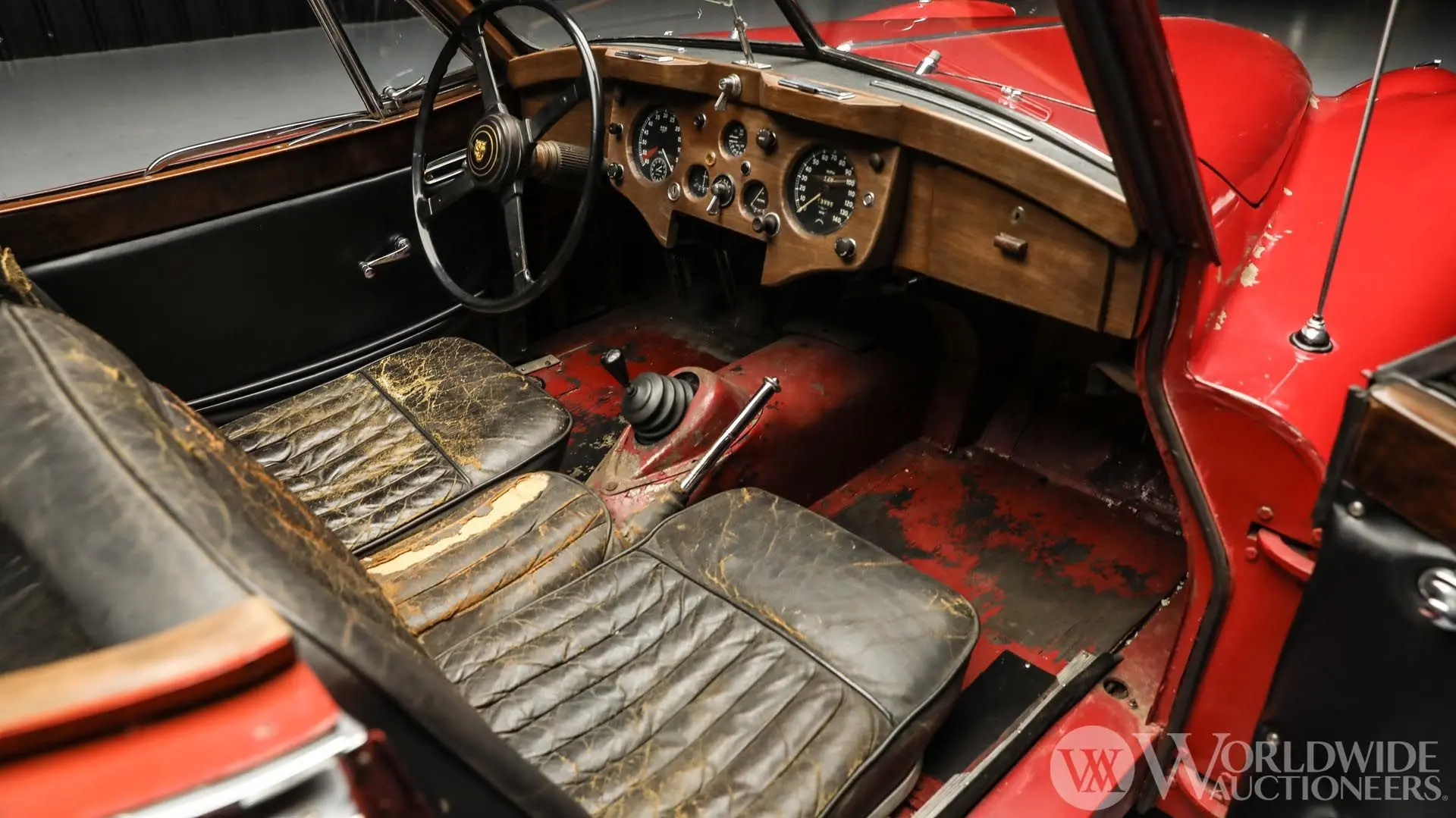
The Jaguar wore red paint and number 23. Underneath the elegant body was the high-performance MC specification, including the C-Type cylinder head. It was a serious piece of machinery, but it was still a roadgoing drophead with a leather interior and a folding top—not the most obvious weapon for launching a racing career.
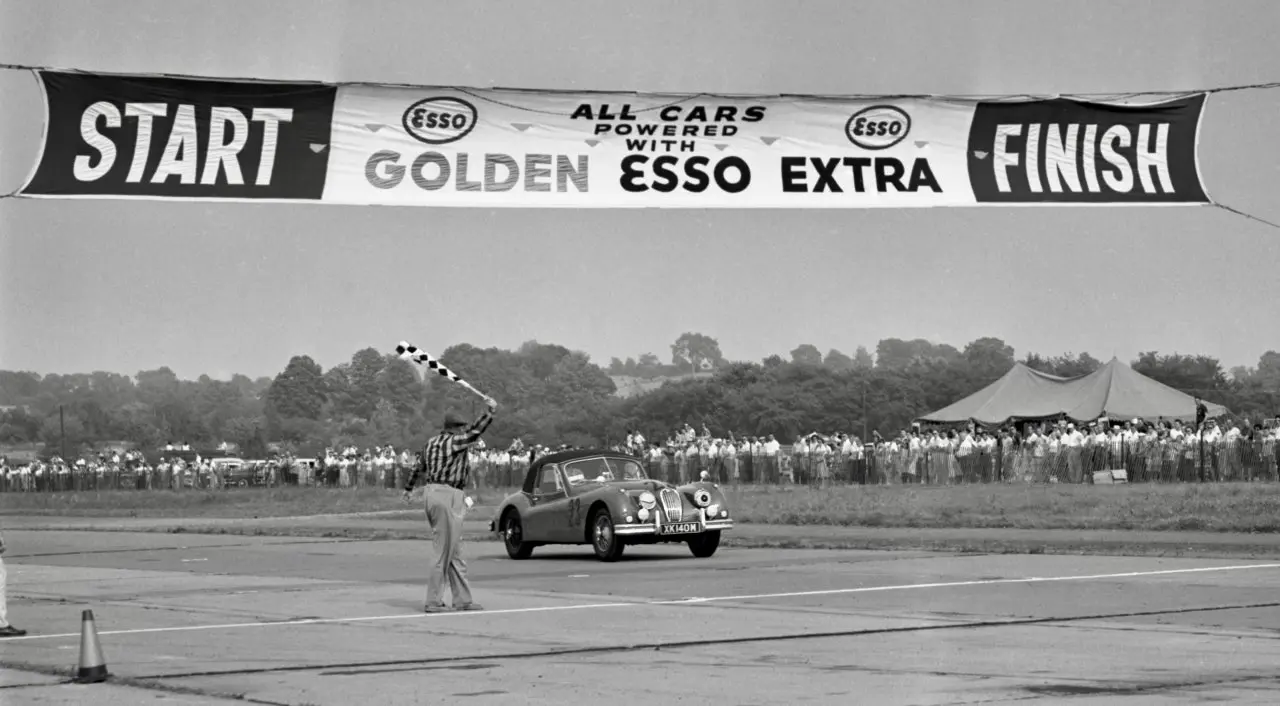
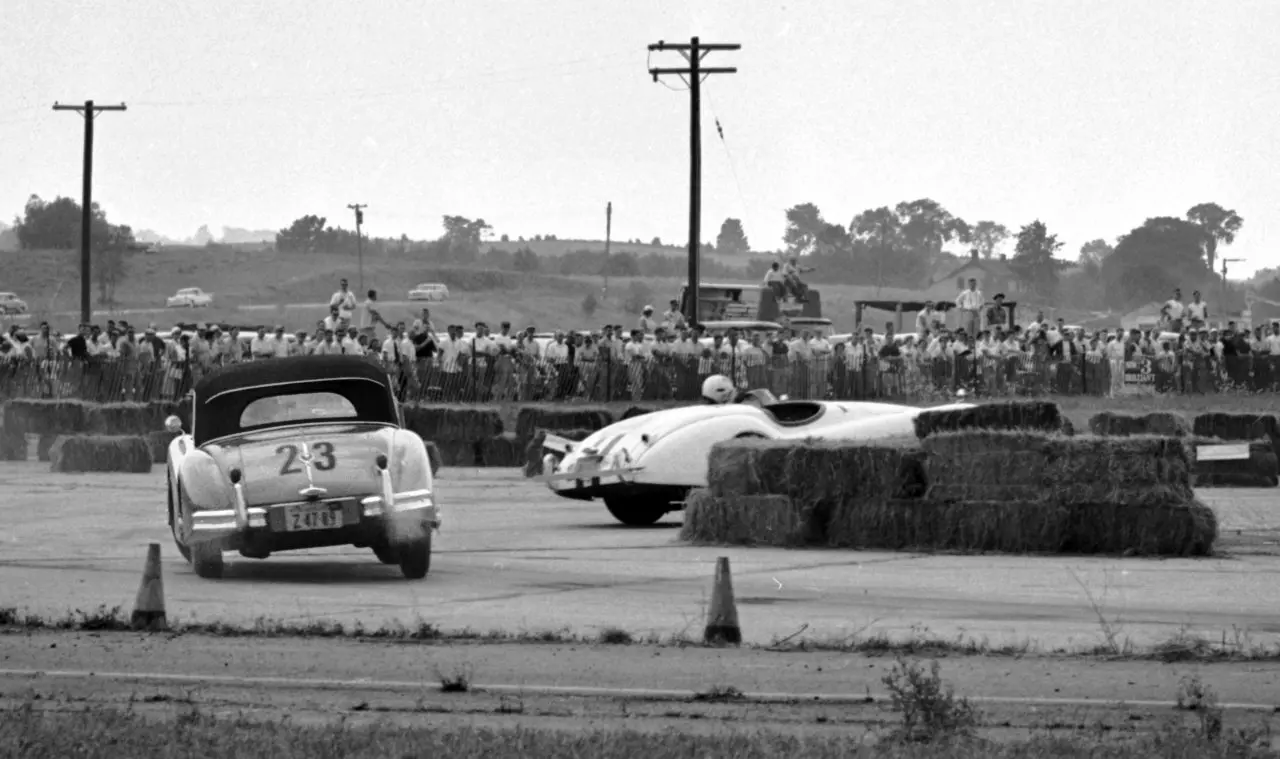
At an SCCA regional race in Montgomery, New York, in August 1956, McCluggage made her competition debut at age 29. She won the Ladies Race outright. The period photograph of her taking the checkered flag removes any need for embellishment: the Jaguar is leaning, Denise is committed, and everybody else is behind her.
That victory was only the opening argument. McCluggage went on to compete at major international events and earned a GT-class win at the 12 Hours of Sebring in 1961, sharing a Ferrari 250 GT SWB with Allen Eager. She also won her class at the Monte Carlo Rally in 1964. She raced Jaguars, Ferraris, Porsches and Maseratis at a time when simply getting a woman entered could require more work than getting the car prepared.
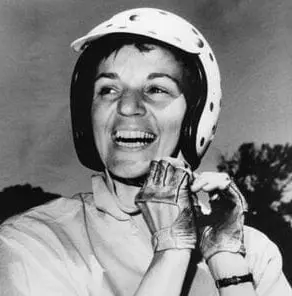
She was equally formidable with a typewriter. McCluggage helped shape modern racing journalism through Competition Press, the publication that became Autoweek. When officials barred women from the Indianapolis garage area, she interviewed drivers through the fence. The establishment had a rulebook. Denise had a press credential, a spotted helmet and a much faster argument.
The Jaguar eventually disappeared from public view. Barnaby Brokaw followed the car’s trail for nearly 25 years before acquiring it. It had spent decades out of sight, but it survived as an unusually complete and largely unrestored machine. Its worn leather, aged paint and competition details were not flaws to be erased. They were evidence.
Cunningham historian Lawrence “Larry” Berman helped authenticate the car and its history. One small detail carried particular weight: the brake pedal had been bent to better fit McCluggage, reportedly by Cunningham team mechanic Alfredo Momo. It is the kind of modification no concours restoration would invent and no spec sheet could properly explain.
Brokaw got the Jaguar running and called it “Lady Leadfoot.” In 2022, the car was displayed when McCluggage was inducted into the Motorsports Hall of Fame of America. She had died in 2015, but the machine that delivered her first win was present to help tell the story.
This is why original cars matter. Not because every scratch is sacred or every tired seat must remain untouched forever, but because some machines carry physical information that photographs and race results cannot. This Jaguar still shows how Denise McCluggage entered the sport: in a red number 23, moving quickly, asking no one to make room.